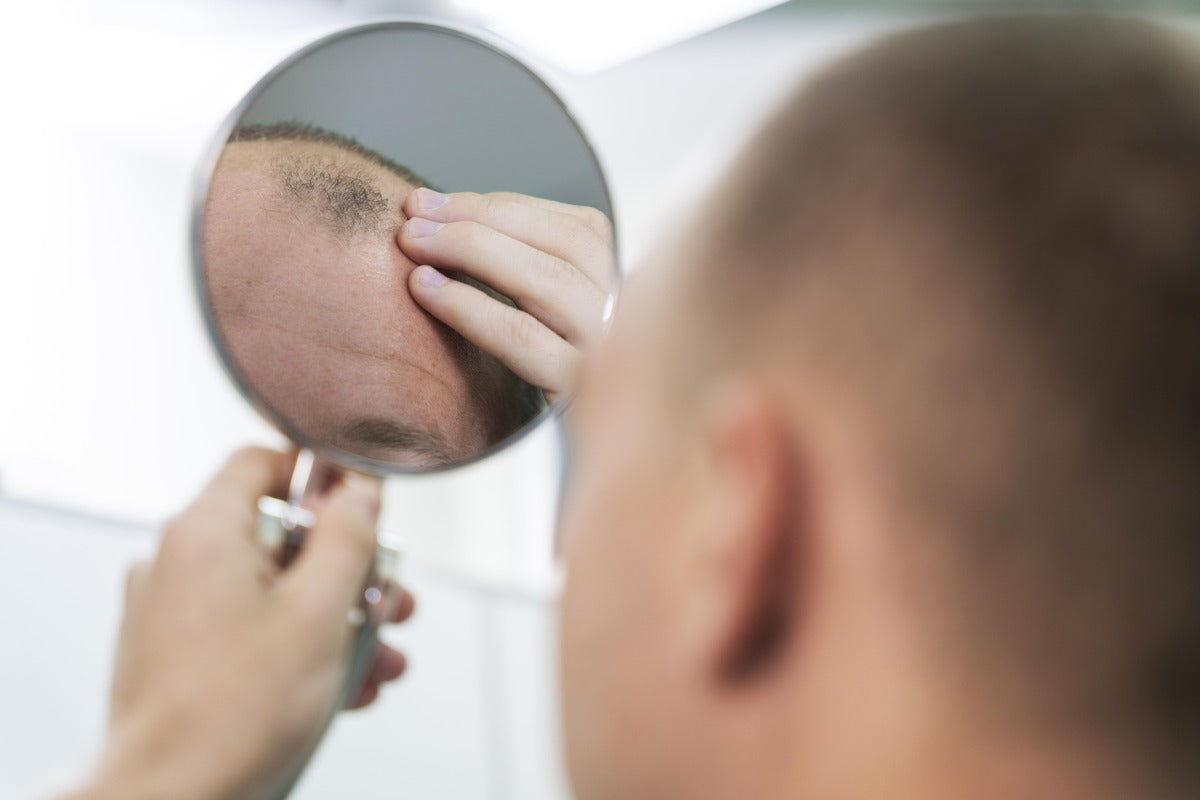
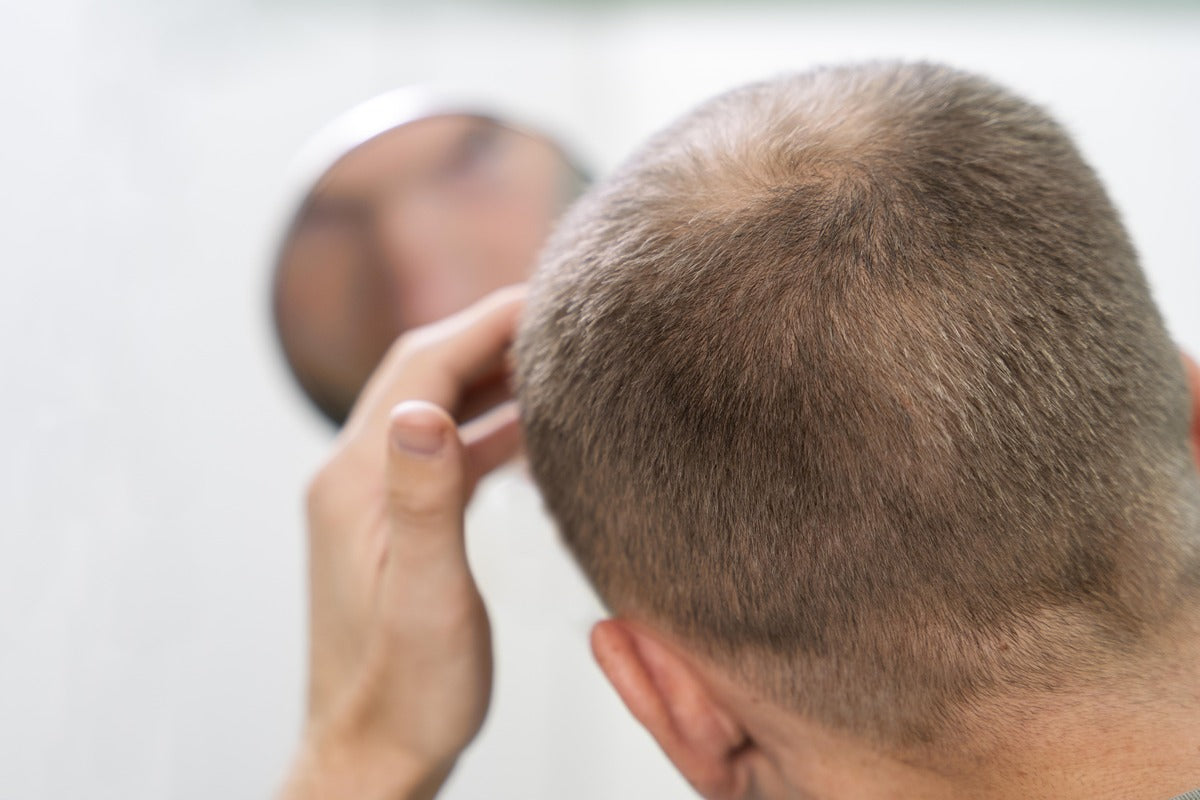
You feel more hair in your brush since starting Wellbutrin. It’s a common worry, and it can be hard to tell if the medication is the cause or if something else is going on. Men often notice thinning at the hairline or more shedding in the shower and jump straight to panic.
There is a real condition tied to antidepressants that can cause shedding, and bupropion (Wellbutrin) is part of that story. The bigger picture is more balanced.
This guide reviews the medical evidence on Wellbutrin hair loss, how antidepressants can trigger temporary shedding, what people report on forums, and what you can do to protect your hair. You’ll also learn some practical steps that help with hair thinning on antidepressants.
What the Evidence Says: Can Wellbutrin Cause Hair Loss?
Wellbutrin has a long track record. In FDA and manufacturer safety data, hair loss appears as an infrequent side effect. Most labels specify it in the 0.1%-1% range. That means it can happen, but it’s rare compared to common side effects like dry mouth or trouble sleeping.
Large database studies give more context. A claims-based study comparing antidepressants found that bupropion had a higher relative risk of hair loss than several SSRIs. The absolute risk stayed low, measured in a small number of cases per thousand people per year.
Mirtazapine, venlafaxine, and sertraline also have documented cases. So the signal is real, but the odds for any one person are still small.
How Antidepressants Trigger Telogen Effluvium
The most common pattern tied to medications is called telogen effluvium. In plain terms, a higher number of hairs shift from the growth phase to the resting phase at the same time. About three months later, those resting hairs shed together. That is why people often notice hair coming out in clumps weeks after a change.
Stress hormones, inflammatory changes, and shifts in neurotransmitters can all play a role. Bupropion affects norepinephrine and dopamine. That change may push some hairs into a resting phase for a short stretch. Antidepressants can also improve mood and sleep, which tends to help hair over the long run. The early months are the tricky part.
Is it Permanent?
Hair loss from Bupropion usually reverses. Once your body adapts or the trigger ends, shedding slows over 2 to 3 months. Regrowth then follows, often noticed as short, soft baby hairs along the hairline. Many dermatology sources set the full recovery window at 3 to 6 months after shedding peaks. Some people may require 9 to 12 months for hair density to return to normal, especially if shedding was heavy or other factors are present.
Hair loss becomes long-term only if:
-
The drug trigger continues, and the scalp keeps cycling poorly.
-
There’s another cause, such as male pattern hair loss, low iron, thyroid disease, or crash dieting.
-
There are ongoing triggers like sleep loss or persistent stress.
Real-Life Experience from People Using Wellbutrin
User stories help fill in gaps between stats. They show patterns around timing, dose, and what helps. Reading through Reddit threads and other forums, we can see that many people are concerned about taking it.

Common patterns reported by users:
-
Timing: Many report a gradual increase in shedding from weeks 4 to 8. Some start later, near the 12-week mark.
-
Dose: Shedding reports are more frequent at higher doses. Some people say lowering the dose helped within a month or two.

-
Formulation: No strong proof that XL vs SR changes risk in a reliable way. A few users say the XL form smoothed things out; others saw no change.
- Scalp feel: Some men report itching, tingling, or tenderness before shedding picks up. That can be scalp inflammation or just more awareness once hair starts falling.

-
Anxiety and stress: Many posts link flares in shedding with rough weeks, poor sleep, or big life stress. That fits the telogen effluvium picture.
-
Mixed outcomes: Plenty of people report zero hair changes on bupropion, even at higher doses. Some report better hair after a switch from another antidepressant.
-
Recovery stories: Those who reduced the dose or switched often describe shedding slowing in 4 to 8 weeks, with baby hairs coming in not long after.
These threads can be helpful, but they aren’t controlled studies. People who notice shedding are more likely to post, so forums skew toward problems.
Can Wellbutrin Ever Help Hair?
In rare situations, Wellbutrin may improve hair growth indirectly. One area studied is trichotillomania, a condition involving compulsive hair pulling. Bupropion has shown benefit for some patients by reducing urges tied to dopamine.
Another angle involves depression itself. Severe depression disrupts sleep, nutrition, and hormone balance. Once your mood improves, routines often stabilize. Better sleep and regular meals support healthier hair cycles.
Some users report less stress-related shedding after mood lifts. This is not Wellbutrin causing hair regrowth directly. It is the body moving out of a stress state that harmed hair in the first place.
These effects do not apply to everyone. They explain why a small number of people notice thicker hair while on the medication.
Signs Your Hair Loss Isn’t From Wellbutrin
Hair loss can be caused by various factors. If you started Wellbutrin and saw changes, timing is important, but it doesn’t necessarily mean hair loss is caused by the medication. Look for these clues:
-
Male pattern hair loss: Receding hairline, temple thinning, or a thinning crown that runs in the family. This pattern is driven by DHT sensitivity and tends to keep going over for years.
-
Thyroid shift: Fatigue, weight change, feeling cold or hot, and hair shedding together can point to thyroid issues.
-
Iron and ferritin: Low ferritin is tied to diffuse shedding. Men can run low after blood loss or restrictive diets.
-
Vitamin D and B12: Low vitamin D and B12 levels are common in chronic shedders.
-
Crash dieting or illness: Big calorie cuts, GI problems, and infections can trigger a telogen effluvium wave.
-
Hairstyles and scalp health: Tight hats, traction from styles, harsh bleaching, and heavy dandruff can cause extra shedding.
If your pattern looks more like male pattern baldness, a dermatology plan focused on DHT and follicle stimulation makes sense, no matter what antidepressant you take.
How to Manage or Prevent Hair Loss While on Wellbutrin
You want a practical plan that protects mental health and supports your hair. This approach keeps things simple.
Talk to your doctor if:
-
Shedding begins 6 to 12 weeks after starting or raising the dose.
-
You see bald patches, scalp pain, flaking, or redness.
-
You have other symptoms like fatigue, weight change, or cold intolerance.
-
Shedding becomes heavy and persists beyond 3 to 4 months.
Smart medication steps:
-
Discuss a dose review. Many men do well at 150 mg. A trial at the lowest effective dose can make a difference.
-
Ask about SR vs XL. A smoother curve can help some people, even if the data is mixed.
-
If hair loss is severe and persistent, talk about a switch. Decisions should factor in mood control, past responses, and personal hair goals.
Nutrition and daily habits that support growth:
-
Protein: Hair needs amino acids. Aim for a steady intake across the day. Many men feel best with 0.7 to 1 gram of protein per pound of body weight during recovery phases. If that feels high, start by adding 20 to 30 grams to breakfast and lunch.
-
Iron and ferritin: Ask for labs if shedding is diffuse. If ferritin is low, your clinician can guide food strategies or supplements.
-
Vitamin D, B12, zinc: Correct deficits with your care team.
-
Hydration and sleep: Hair likes a steady routine. Aim for regular sleep and movement. Short walks and resistance work help stress control.
Scalp care and evidence-backed treatments:
-
Minoxidil 5% topical: Foam or solution once or twice daily can shorten a TE episode and support regrowth. Most men start to see less shedding in 6 to 8 weeks and thicker feel in 3 to 6 months. There is no known interaction with bupropion.
-
Microneedling: Weekly sessions with a 1.0 mm dermaroller may boost response in androgenic thinning. Use light pressure and proper hygiene.
-
Low-level light therapy: Laser caps have supportive data for density over months of steady use. Consistency matters here.
-
Ketoconazole shampoo 1 to 2%: Use twice weekly for scalp health, flaking, and itch. A calmer scalp helps people stay on their routines.
-
Caffeine and botanicals: Caffeine, rosemary oil, peppermint oil, ginseng, and licorice root show early evidence for scalp circulation and follicle support. Topical options that reach the scalp can fit into a quick routine. Spartan’s Root Activator line was built around that idea for men who want a simple, non-prescription path alongside medical care.
Stress control:
-
Short daily practices help. Try a 5-minute breathing, a walk outside, or a consistent lights-out time.
-
Reduce scalp picking or checking. Set times to style hair and avoid pulling at shedding hairs.
A simple plan could look like this:
-
Weeks 1 to 4: Track hair fall, clean up diet, start minoxidil, and add a scalp-friendly shampoo twice weekly.
-
Weeks 4 to 8: Review shedding trend, check in with your prescriber about dose or formulation, add light therapy if you want another lever.
-
Weeks 8 to 12: Reassess. Look for baby hairs and a better density feel. Continue what is working and remove what you won’t stick with.
Key Takeaways and Next Steps
The evidence shows Wellbutrin hair loss is real but rare, usually temporary, and often mixed up with stress or genetics. If your mood is improving, that progress matters. Hair can recover. Your well-being deserves patience.
-
Wellbutrin hair loss can happen, but it’s uncommon and usually temporary.
-
Timing matters. Look for a 6 to 12 week lag after a dose change or start.
-
Rule out other causes. Ask for ferritin, thyroid, vitamin D, and B12.
-
Protect your hair routine. Minoxidil, scalp care, and steady nutrition give you an edge.
-
Work with your clinician on dose, form, or a switch if needed.
-
Add simple scalp-focused products with caffeine and botanicals if you want a non-prescription boost.
Spartan’s Root Activator system pairs well with medical care and takes only a few minutes a day. If you’d like a practical scalp plan to use alongside your prescription, review our Root Activator Shampoo, Root Activator Conditioner, and Root Activator Spray, or reach out for help building a routine that fits your schedule. Keep your mental health plan steady, support your scalp, and give your hair time to cycle back.
FAQs
Does Wellbutrin always cause hair loss?
No. Hair loss with bupropion is uncommon. Many people never notice shedding on it. When shedding does show up, it usually follows a telogen effluvium timeline and settles with time, a dose change, or a switch.
Can different Wellbutrin forms change risk?
Some people feel better on XL compared to SR or IR, likely from steadier blood levels. Clear evidence that one form prevents shedding more than another is lacking. A personal trial with your prescriber can help find the best fit.
Does Wellbutrin affect men and women differently?
The telogen effluvium process is similar for everyone. Men often have male pattern hair loss at baseline, so shedding can bring that pattern forward and make it more visible. Women tend to notice diffuse thinning. The plan still focuses on triggers, scalp care, and proven treatments.
Is it safe to use minoxidil while on Wellbutrin?
Topical minoxidil has no known interaction with bupropion. Many dermatologists pair them without issues. Oral minoxidil is a different conversation and needs a clinician’s guidance.
Can Wellbutrin actually help with hair-pulling disorders (trichotillomania)?
There are case reports that bupropion can reduce hair-pulling in some people. Results vary. If hair-pulling is part of your story, speak with a mental health clinician about options that include therapy and medication.