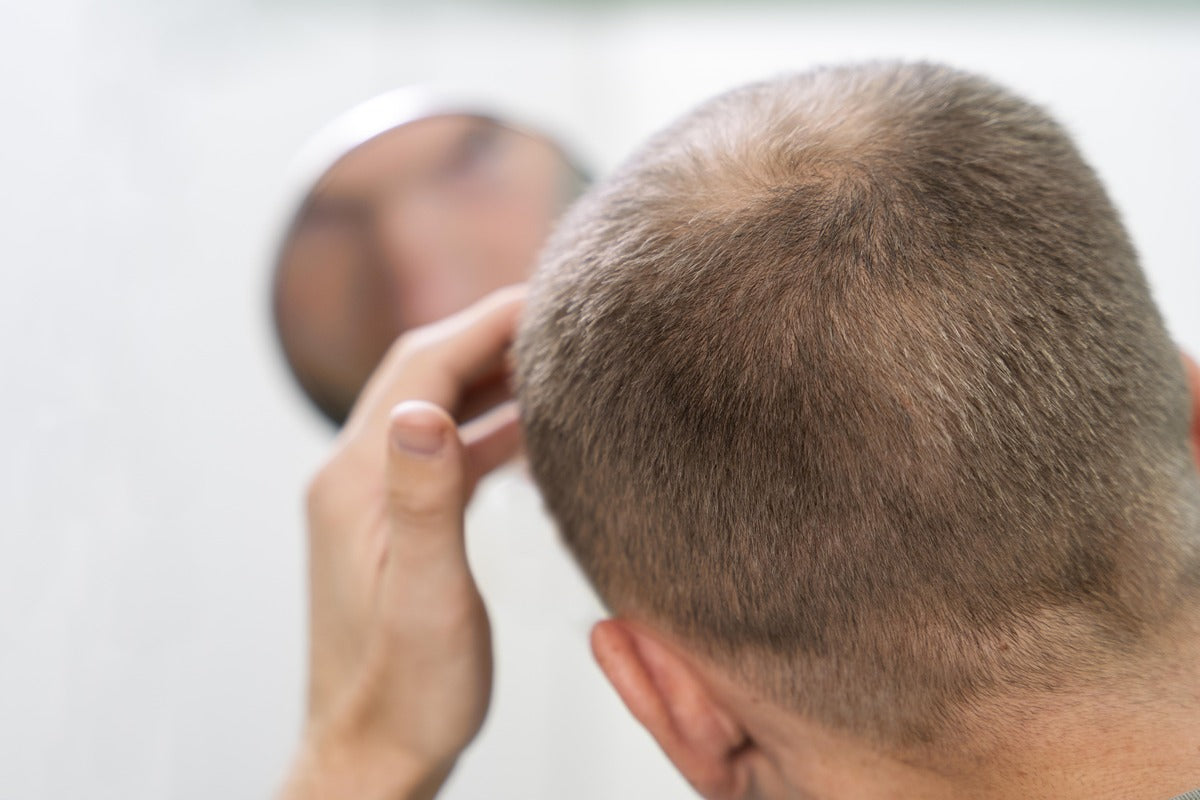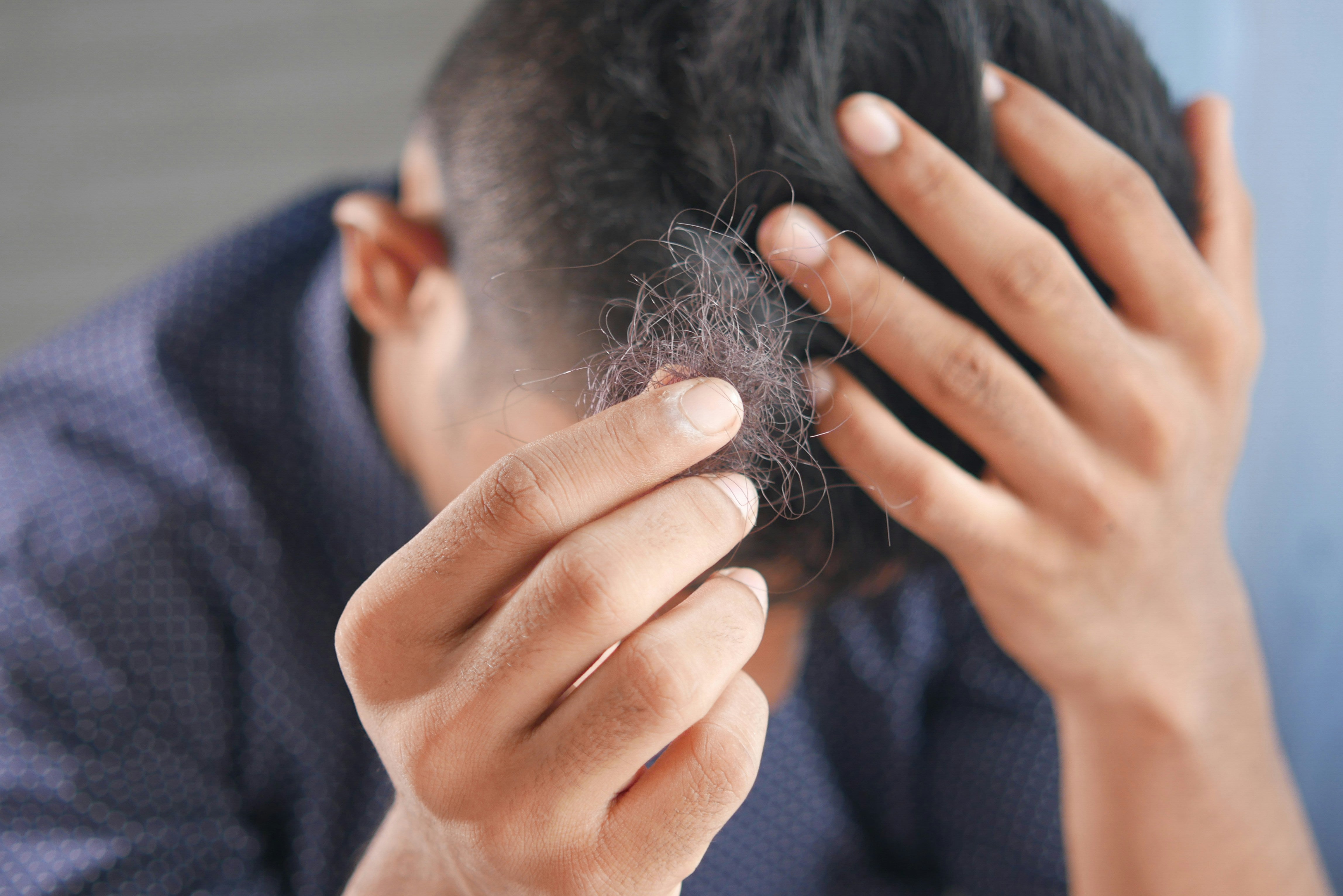

Hair loss feels personal, and when you start noticing more strands in the sink, it is easy to blame the habit you already feel guilty about. So let’s look at this topic without panic.
This question matters because many men link smoking to early hair thinning. But does smoking really cause hair loss? There are studies that point toward a connection, but nothing in the scientific world claims smoking is the only cause.
Hair loss is complex. Smoking may play a part. It may speed things along for men who already have a family history of thinning. It may do very little for others.
Our goal is to help you understand the science without fear, offer realistic expectations, and give you some steps to support your scalp, whether you quit or keep smoking.
The Connection Between Smoking & Hair Loss
Scientists have looked at smoking and hair thinning for years. Several studies show smokers are more likely to notice reduced density or early thinning. In some research, heavy smokers showed a higher chance of moderate to severe hair loss compared to non-smokers.
This does not prove smoking alone is the culprit. It does hint that smoking can influence the scalp in ways that do not help hair grow.
How smoking may affect the scalp:
-
Less blood flow reaching hair follicles
-
Oxidative stress that harms cells
-
Increased inflammation
-
Slower healing in tissues
Blood carries oxygen and nutrients. When those deliveries drop, follicles may weaken. Oxidative stress is a fancy way of saying the body gets hit with unstable molecules that damage healthy cells. Inflammation can create a less friendly environment for growth.
Think of it like this: your scalp is a construction site, and your follicles are workers. Smoking does not fire the workers. It just cuts their resources, makes the environment dusty, and slows the supply truck. Growth still happens, but it may not be at the same pace or quality.
What Researchers Think is Happening
The possible chain reaction looks something like this:
-
Nicotine and toxins can narrow blood vessels
-
Narrow vessels reduce oxygen that reaches the scalp
-
Free radicals build up
-
Damage increases in the follicle area
The current science suggests a link, but there is no final claim saying every smoker will lose hair because of nicotine or toxins. The research continues, and experts are cautious with sweeping statements. That means we can recognize the risks without acting like hair will fall out overnight after a cigarette.
Real-Life Opinions About Smoking and Hair Loss
Online forums offer a look into how smokers think about their hair. They are not labs. They are not controlled studies. They show honest experiences, mixed opinions, and sometimes frustration.
Many users say that they immediately noticed a massive shedding when they started smoking cigarettes again.

Another user mentioned that his hair loss became worse from smoking. It gets better when he quits for a while, so he’s sure it’s connected to nicotine.
 Even though most of the posts and threads mention that smoking does cause hair loss, there are still people who have a perfect hairline despite smoking for years.

These mixed stories do remind us that hair loss varies. People are more likely to write on forums when they have a problem or want to find people with similar issues. Smoking may play a part for some and be almost irrelevant for others. But they don’t prove anything.
What Online Communities Agree On
Most long-term conversations settle around these points:
-
Some smokers feel quitting improves thickness
-
Others see no improvement
-
Genetics and age matter
-
Stress and diet also matter
A common theme is uncertainty. Many men quit for reasons beyond hair anyway. The possible scalp benefits feel like a nice bonus, not the only motivation.
Theories Behind Smoking-Related Hair Loss
Scientists have created several theories. None of them claims definite outcomes, but each offers a logical route for how smoking can make things harder for your scalp.
Blood Flow Theory
Nicotine can shrink blood vessels. Smaller blood vessels equal less oxygen and fewer nutrients. Hair roots need healthy circulation, so less blood can mean weaker growth.
Hormonal Theories
Some research suggests smoking might affect hormones tied to hair growth. DHT, a hormone linked with male pattern baldness, may play a role. Smoking might nudge hormone levels in a direction that encourages thinning.
It is not known for sure. The idea is that smoking might not cause baldness, but it could add pressure to an already vulnerable scalp.
Immune and Inflammation Theory
Smoking puts stress on the immune system. That stress can raise inflammation inside the body. Inflamed tissue does not support healthy growth the same way calm tissue does.
Signs linked to inflammation are redness, sensitivity, and slower healing. If the scalp feels this stress, follicles may struggle.
DNA Damage and Oxidative Stress
Free radicals cause cell damage. When hair cells take that hit, growth may weaken. Over time, this can lower the thickness or density.
Does Smoking Speed Up Genetic Balding?
If baldness runs in the family, smoking could move the timeline forward. It is like stacking two cards instead of one. Smoking does not cause the problem. It might add weight to it.
Myths vs. Reality
|
Myth |
Reality |
|
Smoking always causes hair loss |
It can increase risk, but many smokers keep a full thickness |
|
Only heavy smokers lose hair |
Light smokers may notice changes too |
|
Quitting instantly regrows hair |
Improvements take time |
|
Smoking changes your hair color |
Color shifts are mainly from age or genetics |
Quick explanations:
-
Risk does not equal fate. Smoking might stack the odds in favor of thinning, but it does not seal the deal.
-
A light smoker still exposes the body to toxins. There is no safety pass.
-
Hair growth is slow. Expecting instant regrowth after quitting can be disappointing.
-
Color is mostly genetics and aging. Smoking does not change natural pigment.
Can Quitting Help Your Hair?
What happens when you quit smoking? Within weeks, your body begins to move toward a healthier state. Blood flow can improve. Less oxidative stress means a calmer environment for follicles.
Possible benefits:
-
Better circulation
-
More oxygen for follicles
-
Lower inflammation
-
Improved sleep habits
-
Cleaner diet choices
Many men feel better overall after quitting, and those changes can influence hair health.
How Long Might it Take to See Changes?
Hair growth is slow. You may not notice visible results for months. You might feel your scalp health improve before you see thicker strands. Patience matters here.
Some men notice less shedding or a smoother texture before they notice more density.
Healthy Habits to Support Hair
You cannot control genetics, but you can support your scalp with daily habits.
Try:
-
Protein-rich foods like eggs, lean meats, and beans
-
Iron sources like leafy greens
-
Vitamins C and D
-
Omega-3 fats
Lifestyle habits that help:
-
Better sleep routines
-
Exercise to boost circulation
-
Less stress
-
Gentle shampoo and conditioner
-
Avoiding intense heat tools
If shedding feels rapid or patchy, a dermatologist can help you sort out the cause.
Other Hair Loss Causes
Smoking rarely acts alone. Other hair loss causes may include:
-
Genetics
-
Hormones
-
Nutrient deficiency: low iron, vitamin D deficiency, etc.
-
Stress may cause hair loss under specific conditions
-
Medical conditions and some medications have hair loss as a side effect
This gives you a wider picture. If smoking plays a part, it does so beside other major influences.
Summing Up
Smoking can play a part in hair thinning, but it rarely stands alone as the single cause. For some men, quitting may slow shedding or improve thickness. For others, it may do little because genetics or hormones carry more weight.
Quitting supports your health. It may also help hair. Even if your results are small, you gain lung and heart benefits too. Small steps matter, and healthier habits give follicles a better chance.
If you want products that focus on scalp support, Spartan’s Root Activator line offers targeted care. Use the Root Activator Shampoo to clear your scalp, add the Root Activator Conditioner to nourish your hair follicles, and finish with the Root Activator Spray to support hair growth.
Our products are made to support healthier hair growth. You’ll see results within 6-8 weeks of consistent use, especially when you pair them with improved lifestyle habits.