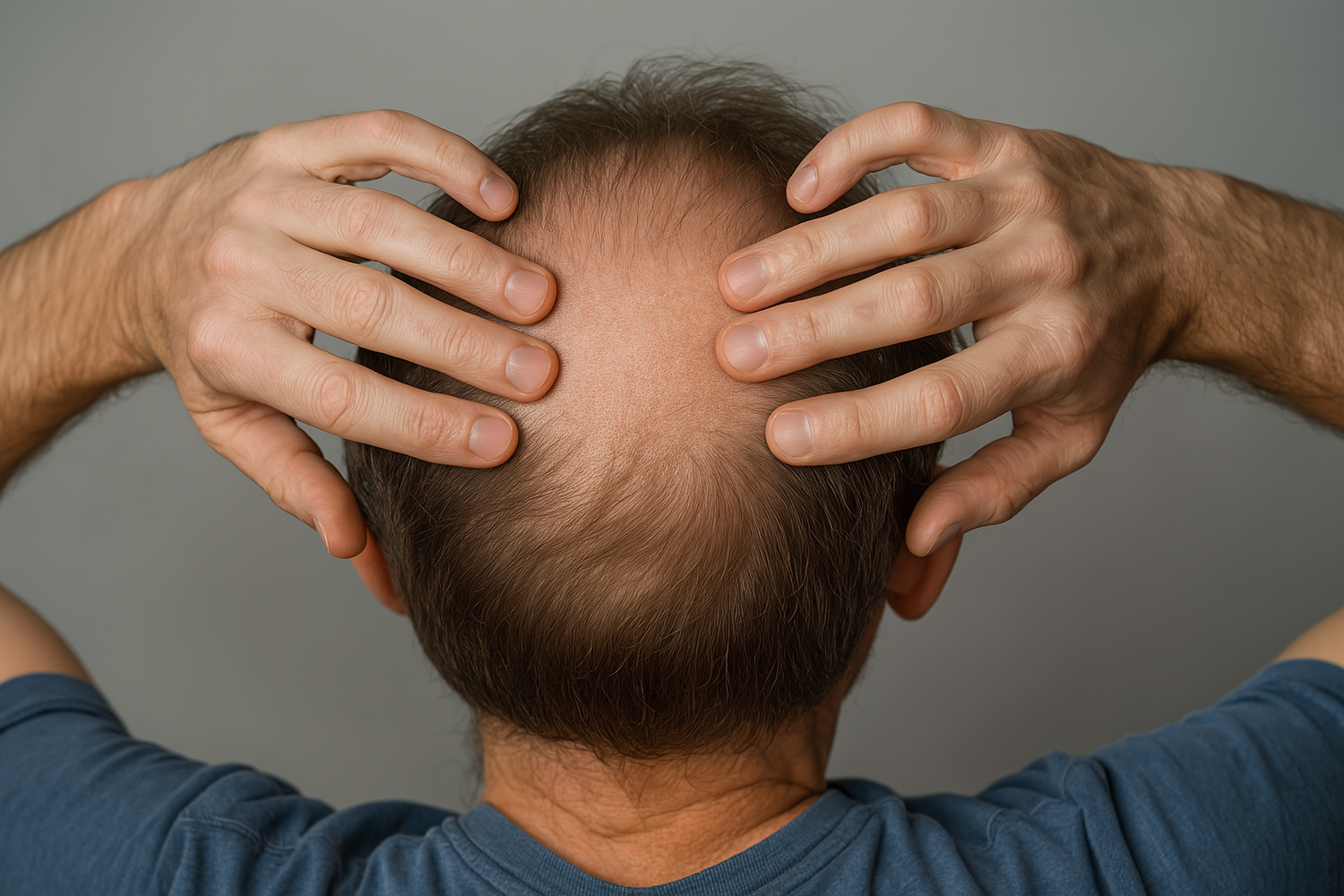
Hair loss has long been a serious issue. Even though there are many haircare products and procedures accessible to everyone, growing healthy hair back is still a challenge.
There are many different reasons why people start losing hair. The most common reasons are genetics and stress. Medications can also cause hair loss as a side effect.
Some treatments, like chemotherapy, are known to cause hair loss weeks after treatment. In other cases, it happens months after taking them. This is why many people don’t often see this connection.
In this guide, we’ll share a list of medications that cause hair loss, the reasons behind it, and what you can do about it.

Real-life example of an 18-year-old male with hair loss signs: check full discussion
How Medications Lead to Hair Loss
Hair naturally goes through cycles. Each strand grows for 2-7 years, then rests for a few months before falling out. Most of your hair is in the growing phase. Only 10% is in the resting phase at any time. Shedding 50-100 hairs a day is considered normal. Medications can mess up this cycle.
Telogen Effluvium is the most common type of hair loss. It happens when drugs push too many hair follicles into the resting phase at once. So, you might start losing up to 300 hairs a day after 2-3 months of treatment.
Anagen Effluvium happens more quickly. When medications damage the hair follicles during their growth phase, your hair usually falls out within days or weeks. This type is most common with chemotherapy drugs.
Hair loss from medication isn't permanent and can be reversed once your body adjusts to the treatment, or months after you stop taking it.
10+ Medications That Cause Hair Loss
It’s difficult to understand the direct cause-and-effect relationship between a drug and alopecia. So, consider your medications only when other causes are excluded.
1. Cancer Treatment (Chemotherapy)
According to a study, 65% of patients experienced hair loss after chemotherapy. Among cancer treatment drugs, cyclophosphamide and doxorubicin were the most common to cause hair loss.
These drugs treat cancer by targeting fast-growing cells in the body. This includes not only cancer cells but also hair follicles. As a result, hair loss begins 2-4 weeks after starting the treatment.
Chemo drugs affect the whole body, not only the scalp. But hair typically grows back after treatment ends.
2. Medications for Blood Pressure
A case study involving a male patient with hypertension shows that one month after implementing OCNT, their condition improved, but resulted in hair shedding.
This is not the only case. Several types of blood pressure drugs can cause hair loss. Using them can result in hair loss after a few months.
-
Beta-blockers - Metoprolol, Atenolol, Propranolol
-
ACE Inhibitors - Lisinopril, Captopril, Enalapril
-
Diuretics (water pills) - Furosemide (Lasix)
3. Anticoagulants
Direct oral anticoagulants, such as rivaroxaban, apixaban, and dabigatran, don’t have alopecia as a side effect. On the other hand, medications like warfarin (Coumadin) and heparin may cause it.
The reason for hair loss may be how these drugs affect hormone levels and reduce the nutrients reaching hair follicles.
Hair loss from blood thinners usually starts 3-4 months after you start your treatment. You can ask your doctor to change your medication or wait until you finish your treatment.

Real-life example of hair loss after taking anticoagulants: check full discussion.
4. Mood Medications and PDs
Hair loss because of stress and anxiety is very common. But few people know that treating it can also trigger hair thinning.
-
Antidepressants - Fluoxetine (Prozac), Sertraline (Zoloft), Bupropion (Wellbutrin).
-
Mood Stabilizers - Lithium, Valproic acid (Depakote).
-
Anti-anxiety medications - Certain benzodiazepines
The exact way antidepressant drugs affect hair isn't fully understood. The scientists’ best guess is that it may relate to the way they affect hormones and neurotransmitters in the body.
This side effect is usually reversible. Your hair will slowly start growing back after you change your medication or stop your treatment.
Studies show that the chances of severe hair loss caused by psychotropic drugs are less than 1%. The research was based on data collected in 83 psychiatric hospitals in Austria, Germany, and Switzerland, involving over 430k patients.
5. Hormonal Medications
Drugs that cause imbalances in hormones, such as DHT, oestrogen, or thyroid hormones, may affect your hair. For example, some drugs increase DHT (dihydrotestosterone) levels. If you are genetically predisposed, increased DHT can shrink hair follicles and cause hair loss.
Male hormone therapies:
-
Testosterone replacement therapy
-
Anabolic steroids
Female hormone treatments:
-
Birth control pills (especially with androgenic progestins)
-
Hormone replacement therapy (HRT)
Hormone medications like spironolactone can help women with hair growth. But they may cause hair loss in men by blocking certain hormones.
6. Anticonvulsants
Cosmetic side effects are the 4th most common side effect for anticonvulsants and AEDs. And one of the CSEs is hair loss. Most reports and cases show that this hair loss is often telogen effluvium. In all cases, the hair loss reverses after stopping the medication.
Valproate and carbamazepine are the most common drugs that cause alopecia. Apart from these two, hair loss caused by levetiracetam has also been reported.
Hair loss caused by antiepileptic drugs is usually diffuse and does not lead to scarring.

Real-life example of hair loss caused by anticonvulsants: check full discussion.
7. Autoimmune and Anti-inflammatory Drugs
One of the hair loss types, Alopecia Areata, is an autoimmune disorder. Hair follicles have their own tiny immune protection system. This system breaks down in conditions like alopecia. The immune system attacks hair follicles, triggering inflammation and hair loss.
It’s interesting that some anti-inflammatory medications used to treat autoimmune conditions also cause hair loss (methotrexate, high-dose NSAIDs, and some biologics).
Currently, scientists are looking for ways to effectively treat this disorder.
Other Medications
Below you can find more medications that can trigger hair thinning and shedding.
-
Cholesterol-lowering medications - atorvastatin (Lipitor) and simvastatin (Zocor)
-
Parkinson's disease medications (Levodopa)
-
Drugs for high blood sugar (Metformin)
-
Antibiotics (long-term usage)
-
Gout medications (Allopurinol, colchicine)
-
ADHD medications (Adderall)
-
Muscle gain supplements (Creatine)
If your medication and treatment are not on this list, please consult your treating doctor.

Real-life example of people going through telogen effluvium: check full discussion
How to Tell if Your Medication is Causing Hair Loss
Sometimes, it’s really hard to tell if your hair loss was caused by medications. If you don't have other obvious reasons, like extreme stress, childbirth, or thyroid problems, then there’s a high chance that it’s caused by your meds.
Hair loss often begins 2-6 months after starting a new medication. The only exception is chemotherapy. If your hair loss started within that period, then it’s most probably because of the drugs. Keep a log of when you notice increased shedding and any changes in your prescriptions.
What Should You Do About Medication-Related Hair Loss?
1. Don't Stop Taking Your Medication
Never stop taking prescribed medication without talking to your doctor first. The health benefits of many medications outweigh temporary hair loss. It can be dangerous to stop taking certain drugs.
2. Talk to Your Doctor
Schedule an appointment with your doctor to discuss your concerns. They might:
-
Adjust your dosage
-
Switch you to a different medication with similar benefits
-
Add treatments to help with hair regrowth
Be specific about when your hair loss started and how much hair you're losing. Photos can be helpful too.
Consider seeing a dermatologist to help you diagnose hair loss and its causes if:
-
There’s been severe hair loss for more than 3 months
-
There are bald patches rather than overall thinning
-
Your scalp is red or itchy
3. Try Hair Loss Treatments
Having a good haircare routine will help you nourish your scalp and hair follicles. While treating the root cause, you might also consider other options:
-
Minoxidil (Rogaine) can stimulate hair follicles and help reduce the impact of medications on your hair.
-
Shampoos and treatments with saw palmetto, rosemary oil, and peppermint oil may help support hair health.
-
Avoid stressing your hair with heat styling, harsh shampoos, or chemical treatments.
4. Support Your Body
Make sure you get enough protein, iron, zinc, and B vitamins. Eating healthy and balanced food will give you all the vitamins you need to grow your hair.
Effective Hair Growth Products for Men
The Spartan Hair Defense line is for men who are experiencing hair loss due to genetics or medications. Our haircare products contain ingredients like ginger oil, biotin, and ketoconazole. These ingredients work together to support healthier hair from the roots. You can start seeing results within 6-8 weeks of regular use.
Ready to try? Check out Spartan's hair loss products that promise clear results:
-
Cleanse your scalp and stimulate your hair follicles with our Root Activator Shampoo.
-
Combine our Root Activator Conditioner with the shampoo for faster hair growth.
-
Nurture your hair and scalp with our Root Activator Spray.