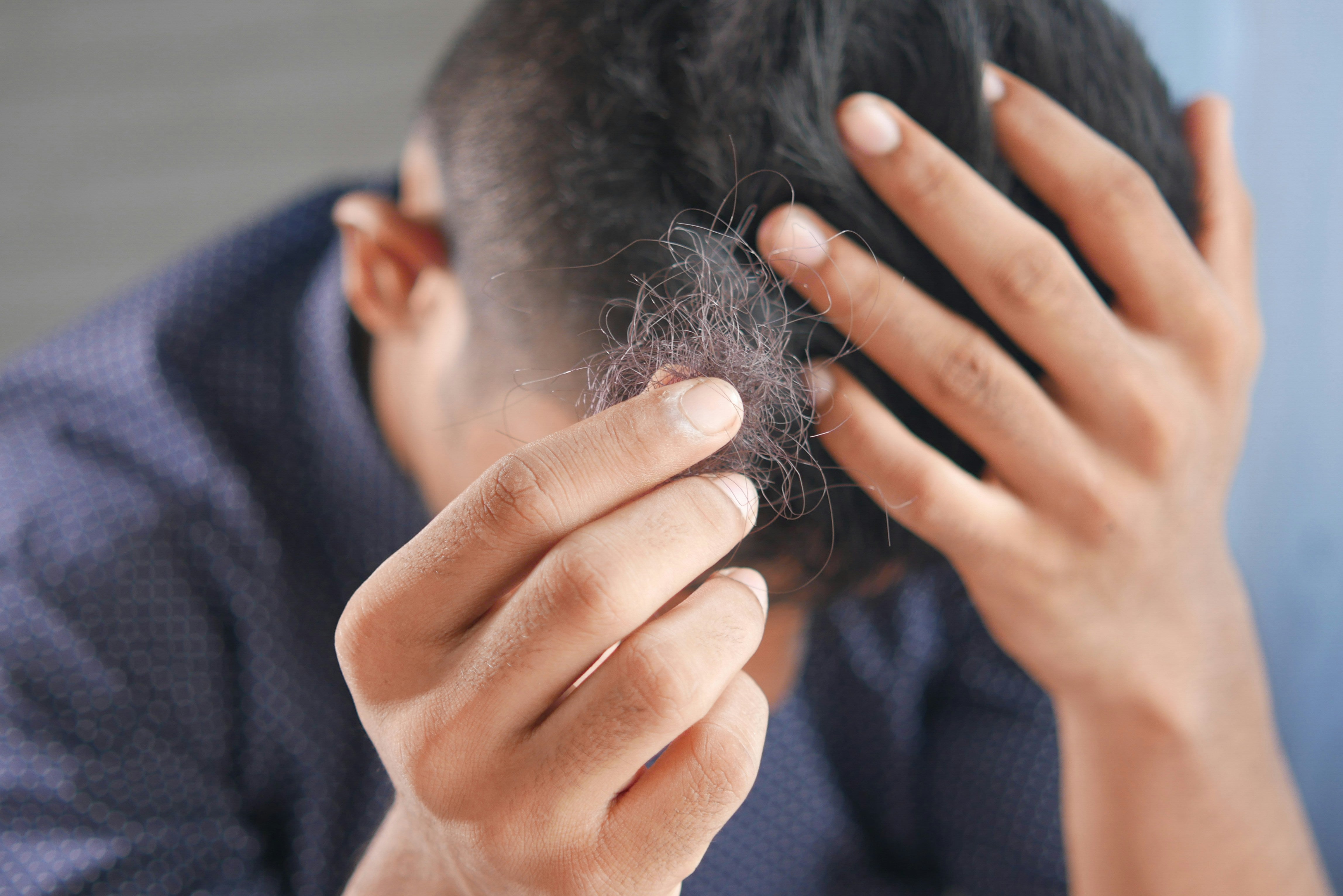

You get through a rough few months. Work pressure piles up. Sleep feels off. Then one morning, you notice more hair on your pillow. It’s hard not to connect the dots. A lot of men do. The question comes up fast and usually with worry behind it. Does stress cause hair loss, or is this something else?

This article gives a clear, grounded answer. You’ll learn about how stress and hair loss can be related, what patterns doctors see, and how to figure out what may be happening in your case.
How Stress-Related Hair Loss Usually Happens
Stress-related hair loss rarely happens overnight. A stressful event can affect hair growth behind the scenes, then shedding happens later. This delay catches many men off guard.
Hair normally grows, rests, and sheds in cycles. When you’re stressed, more hairs are pushed into the resting phase. Those hairs stay in place for a while, then fall out weeks or months later. By the time shedding starts, you might even forget the stressful moment.
Common features include:
-
More hair in the shower drain or on your hands while washing
-
Hair coming out when brushing or towel drying
-
A feeling that hair looks thinner overall, not patchy
This kind of shedding often feels sudden, even though the trigger happened earlier.
Theories on How Stress May Affect Hair
Stress can cause certain types of hair loss. But it’s not the most common reason men lose hair over time. That is where confusion starts.
Stress-related hair loss usually has a different pattern and timeline than genetic hair loss. It often shows up after a stressful period rather than during it. It also looks like shedding across the scalp instead of slow thinning in one area.
Three things matter most when sorting this out:
-
When did the stress happen?
-
When did the hair changes start?
-
Is the hair thinning evenly or receding in certain spots?
-
Has this been going on for weeks or months?
Understanding those points makes the rest of the picture clearer.
Stress affects the body in several ways. Hair follicles are part of that system.
Possible mechanisms include:
-
A high level of stress hormone (cortisol) pushes hair into a resting state.
-
Ongoing stress can increase inflammation that affects the scalp.
-
Stress can influence immune activity in people prone to autoimmune hair loss.
-
Poor sleep, low appetite, and fatigue slow down hair growth recovery.
No single hormone explains all stress-related hair loss. It is a mix of signals that varies from person to person.
What Research Says About Stress and Hair Loss
Medical research supports a link between stress and certain types of hair loss. Stress is viewed as a trigger rather than a guaranteed cause.
Doctors widely accept that telogen effluvium can follow stressful events. The link between stress and alopecia areata is also discussed, though the relationship is complex.
What research shows clearly:
-
Stress can disrupt the normal hair cycle
-
The effect often appears after a delay
-
Not everyone under stress loses hair
What research continues to study:
-
Why some people are more sensitive to stress-related shedding
-
How immune responses play a role
-
Why recovery timelines vary
This explains why two men under similar stress can have very different hair outcomes.
Types of Hair Loss Linked to Stress
Doctors do not talk about one single stress hair loss condition. A few patterns show up more often in people under stress. Each one looks different.
Telogen Effluvium Stress Shedding
This is the most common stress-related hair loss pattern. It happens when stress pushes many hairs into the resting phase at the same time.
What it often looks like:
-
Diffuse thinning across the scalp
-
No clear bald spots or receding hairline
-
Noticeable shedding rather than breakage
The timeline matters here. Shedding often starts two to three months after a major stressor. That stress can be emotional or physical.
Many cases improve over time once the trigger settles. Hair growth usually resumes gradually. Patience helps, even though that part feels hard.
Alopecia Areata and Stress
Alopecia areata causes patchy hair loss. The patches are often round or oval and may affect the scalp, beard, or eyebrows.
Stress is considered a possible trigger in some people. It is not viewed as the sole cause. This condition involves the immune system, which adds complexity.
If patchy loss shows up, a medical visit makes sense. Early evaluation helps clarify what is going on and what options exist. Outcomes vary, so avoiding assumptions helps.
Stress Behaviors That Affect Hair
Stress changes habits. Some of those habits affect hair and scalp health.
Examples include:
-
Hair pulling or twisting
-
Rubbing the scalp during anxious moments
-
Rough brushing or aggressive towel drying
-
Overwashing due to worry about shedding
These patterns are common and often unintentional. Addressing stress and hair habits together gives better results than focusing on hair alone.
Stress vs Male Pattern Hair Loss
Many men blame stress for hair loss that is actually genetic. That mix-up is easy to understand.
Male pattern hair loss usually shows up as:
-
Gradual thinning at the temples
-
Recession at the hairline
-
Thinning at the crown over time
Stress-related shedding usually feels different:
-
Hair falls out in larger amounts
-
The change feels sudden
-
Thinning looks more even across the scalp
Stress can make existing hair loss more noticeable. It can also happen at the same time as genetic hair loss. Both can be true together.
Looking at family history and long-term patterns helps separate the two.
What Men Often Share in Forums and Communities
Men dealing with stress hair loss often look online for reassurance. Forum discussions show repeating themes.
Common experiences include:
-
Anxiety increases once hair loss becomes noticeable
-
Confusion about whether the loss is temporary or permanent
-
Fear that every stressful event will cause more hair loss

Personal stories help people feel less alone. They do not replace medical advice. Everyone’s hair cycle and health background differ.
Some people believe that MPB and stress are connected, but others think it’s just genetics.

In some cases, people deal with stress-related hair loss for years. But if it takes too long to recover, or if you don’t see any positive changes, there might also be another reason behind it.

Reading forums with different perspectives helps prevent unnecessary worry.
What to Do if You Think Stress is Affecting Your Hair
If you think you’re losing hair because of stress, don’t panic. A calm approach works better than quick fixes.
What you can do:
-
Think back two to three months and note major stressors
-
Take photos of your hair once a month under the same lighting
-
Be gentle with washing, brushing, and drying
-
Aim for steady sleep and regular meals
-
Find simple stress outlets that fit your routine
Watching patterns over time often brings more clarity than reacting day by day.
When it Makes Sense to See a Dermatologist
Getting professional input can ease a lot of uncertainty.
Consider a visit if:
-
Hair loss appears in patches
-
The scalp feels painful, itchy, or irritated
-
Shedding lasts longer than six months
-
Hair loss is paired with other health changes
-
You want clarity on what type of hair loss you have
A diagnosis gives direction. Even when treatment is not urgent, understanding the cause helps reduce stress.
Other Common Hair Loss Causes in Men
Stress is only one piece of the picture. Hair loss often has more than one contributor. Below are the most common causes.
Genetic Hair Loss and Androgenetic Alopecia
This is among the most common causes of hair loss in men. It follows a predictable pattern and progresses slowly. Many men mistake the early stages for stress shedding because both can happen during busy or emotional periods.
Hormonal or Medical Factors
Certain health conditions can affect hair growth.
These may include:
-
Thyroid imbalances
-
Low iron or other nutrient deficiencies
-
Chronic health issues that strain the body
A doctor can check for these when hair loss feels sudden or unexplained.
Medications and Treatments
Some medications can cause shedding as a side effect. This shedding often starts a few months after beginning a new medication. It’s important to consult with your doctor before stopping the medication.
Lifestyle and Physical Stressors
Stress is not only emotional. Physical stressors include:
-
Serious illness or infection
-
Surgery or injury
-
Rapid weight loss
-
Long periods of poor sleep
These stressors affect the body in similar ways and can trigger delayed shedding.
To Sum Up
Stress can affect your hair, but it is rarely the only reason. Genes, health, daily habits, and timing all play a role in having healthy hair. To get clear answers, you should watch changes over time rather than jumping to worst-case scenarios.
Along with stress control and patience, some men choose a simple hair care routine for extra support. TrySpartan has a small lineup focused on scalp care for everyday use.
These formulas use ingredients often tied to hair health. They include biotin for strength, saw palmetto to help manage DHT-related thinning, caffeine to wake up hair follicles, and argan oil to keep hair soft and protected.
The Root Activator Shampoo and Root Activator Conditioner aim to keep the scalp clean and hair feeling stronger, while the Root Activator Spray helps in spots where thinning stands out.
Taking things one step at a time, with steady habits and realistic expectations, can make the whole process feel less stressful. Haircare products are not a quick fix. They are more effective when combined with treatment.