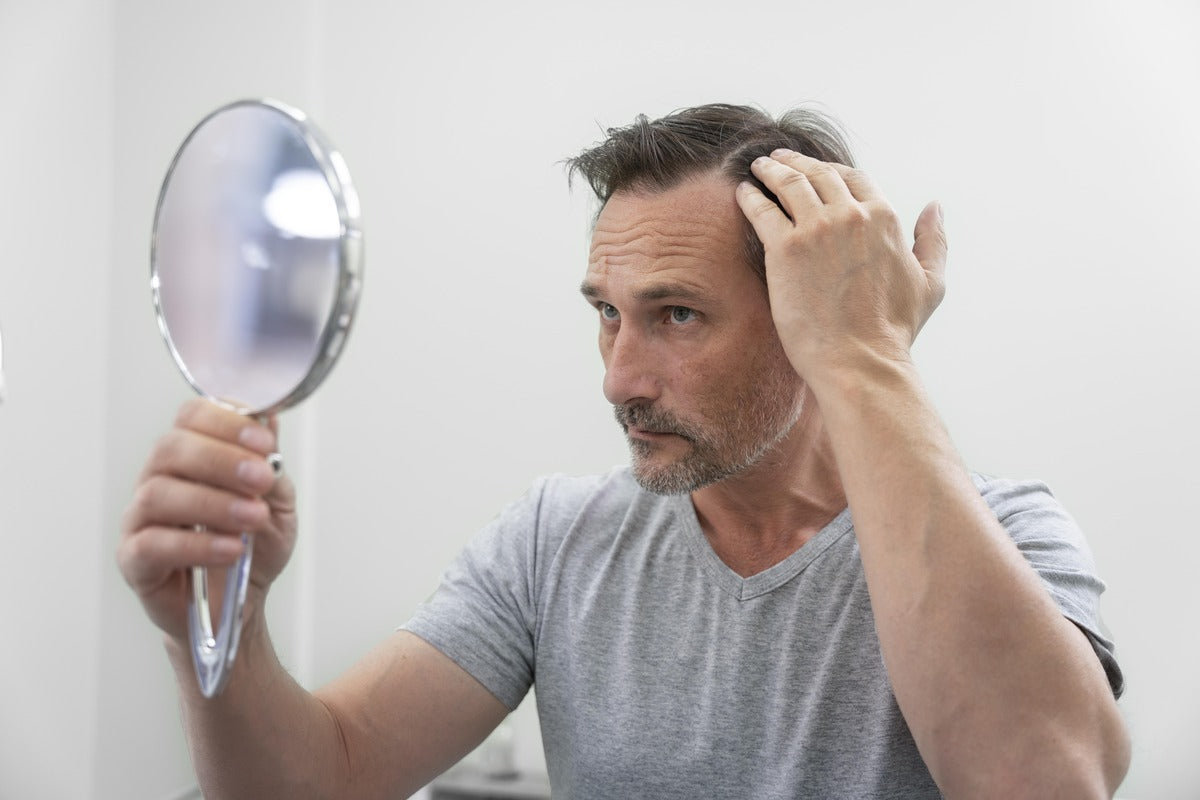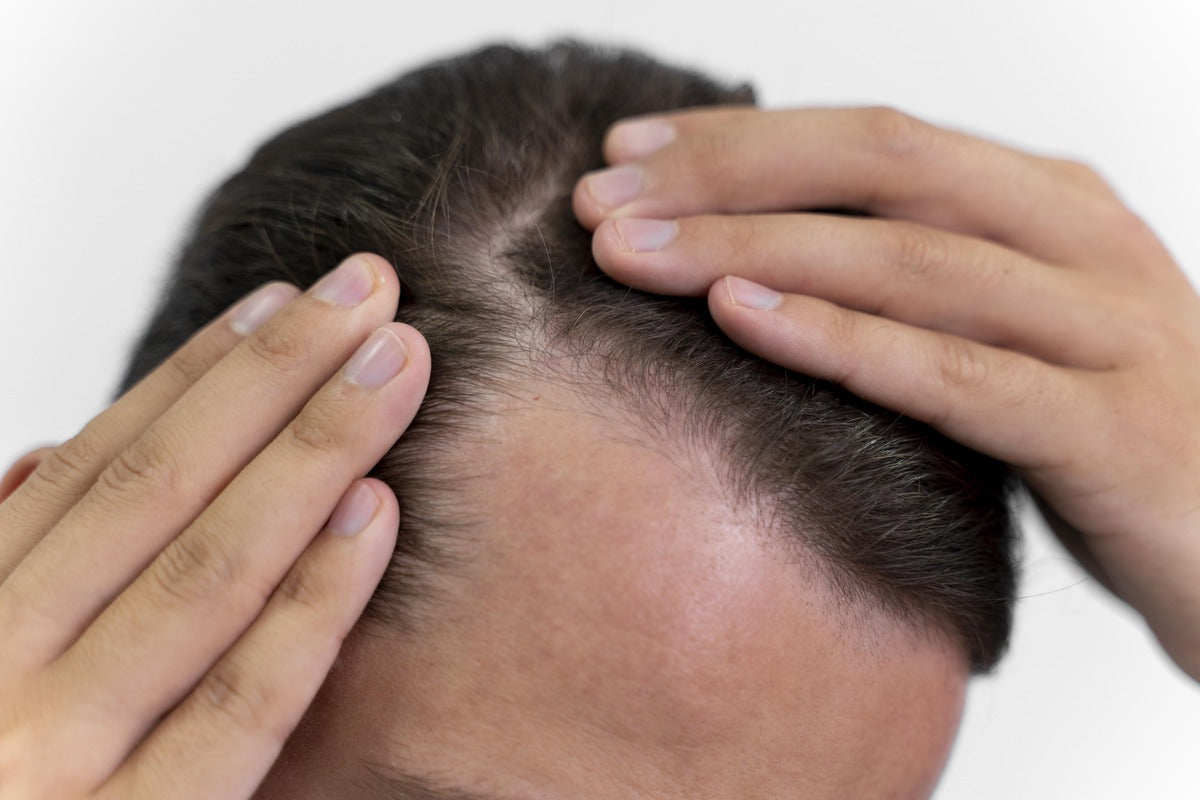

If you’re taking spironolactone or thinking about it, the idea of sudden shedding can feel uneasy. Spironolactone hair loss is not the usual outcome. This medication is often used to protect hair from hormone-related thinning, not cause it. Still, some men say they see early shedding or “spironolactone shedding,” especially in the first few months.
In this article, you’ll see what studies show, why some users shed, who is most at risk, and what to watch for. You’ll also have a clear idea of what to expect and how to keep your hair plan on track.
How Does Spironolactone Affect Hair?
Spironolactone blocks androgen receptors and reduces the activity of hormones like DHT in the skin and scalp. In plain terms, it turns down the signal that shrinks follicles in androgen-driven hair loss. That is why dermatologists often use it in women with female pattern hair loss, acne, and hirsutism.
For men, the use is different. Oral spironolactone can affect libido, cause breast tenderness, and change hormone balance. Many doctors avoid it in cis men for pattern hair loss and prefer finasteride, dutasteride, minoxidil, or low-level light therapy.
Data on men is limited. Reports of shedding tend to reflect a temporary hair cycle shift or an unmasked, ongoing pattern loss that would have progressed anyway. The sections below walk through what research and real users report.
What the Studies Show About Spironolactone and Hair Loss
Most clinical data is focused on female pattern hair loss, where androgen sensitivity plays a central role. Evidence in men with male pattern hair loss is limited, and many clinicians prefer other anti-DHT options for men due to side effects.
Even though spironolactone is more commonly studied in women, the research still gives solid clues about how it affects male hair as well.
Several dermatology journals report that spironolactone improves hair density in many patients with androgen-related alopecia. It found that a large share of users reported slower thinning and visible improvement over several months.
Another study from a well-known dermatology academy looked at spironolactone for female pattern hair loss. The results showed that many participants had better coverage on the top of the scalp and less daily shedding. Doses ranged from 50 mg to 200 mg per day in these studies. While men usually take lower doses due to side effects like breast tenderness or libido changes, the way follicles respond to lowered androgen activity is similar.
So far, research points to spironolactone being more likely to help with hair rather than harm it. Men with strong androgen sensitivity may still respond unpredictably, especially during the adjustment window, but long-term loss caused directly by spironolactone is not supported by studies.
Why Some People Shed After Starting Spironolactone
Early “spironolactone shedding” often tracks with telogen effluvium. Think of the hair cycle like a schedule. A large group of hairs sits in the growing phase, another group rests, and then sheds. A big change to hormones, illness, surgery, crash dieting, or a new medication can push more hairs into the resting phase at once. A few weeks to a few months later, they shed, all together. That is telogen effluvium.
With spironolactone, the trigger is a shift in androgen signaling and mineralocorticoid activity. The scalp reacts, some follicles reset, and a temporary wave of shedding can show up. Typical timing:
-
Start spironolactone
-
4 to 10 weeks later: increased shedding in the shower or brush
-
Peak around 2 to 4 months
-
Gradual return toward baseline followed by recovery, if the underlying cause is managed
Dermatology reviews describe this pattern for telogen effluvium in general. TE is common, usually self-limited, and can ride along with other types of loss, like male or female pattern hair loss.
In user communities and clinic visits, the same story comes up: early shedding that calms down by month 3 to 4, then density looks better by month 6 to 12, especially with supportive treatments.
Real User Experiences
User reports can fill the gaps between clinic visits and journal data. Since Spironolactone is not usually prescribed to men due to its side effects, we still could find some stories related to it.

Scanning forum logs shows a few clear patterns:
-
A wave of early shed. Many users mention an uptick at 1 to 3 months. Some describe “clumps in the shower” for several weeks, then a slow return to baseline. Terms like “TE shed” or “reset shed” come up often.
-
Stabilization and regrowth with time. A large group reports less shedding by month 3 to 4, and thicker ponytails or better coverage by month 6 to 12, often with minoxidil or low-level light therapy added.
-
A minority with ongoing issues. A smaller set reports persistent shedding or no benefit. In these posts, common factors include low iron or thyroid issues, higher stress, or an established pattern of loss that needed a different plan.
-
Several users note that higher doses increased side effects like dizziness, breast tenderness, or irregular periods (in women), with better tolerance after dose adjustments. From forum summaries, supervised dose changes helped many stay on treatment.
These cases can help set expectations, yet they also reflect mixed starting points and different health backgrounds. That’s why tracking your own timeline and labs helps you and your clinician sort out TE versus progressive pattern loss.
Who’s More Likely to Shed or Not Respond
A few groups are more likely to see a shed or limited benefit. Read through this list and see what matches your situation:
-
Established male pattern baldness with miniaturized hair across the front and crown, especially in men using spironolactone for non-hair reasons
-
Recent intense stress, high fever, major illness, or surgery in the past 3 to 6 months
-
Low ferritin or thyroid imbalance
-
Rapid weight loss or low-protein diets
-
Drug interactions or health issues that raise potassium risk, such as kidney disease, use of ACE inhibitors, ARBs, or potassium supplements
-
Pregnancy or planning pregnancy (spironolactone is contraindicated)
-
High dose started abruptly, with no ramp-up period
Medical safety reviews point out that spironolactone is not ideal during pregnancy, and men with kidney or electrolyte problems need extra monitoring.
If your hair is already fragile from male pattern baldness, the early adjustment phase may hit harder, and shedding might be more noticeable. It still doesn’t mean the drug is causing permanent loss, but it does mean you should keep a close eye on changes.
How to Reduce Your Risk of Shedding While on Spironolactone
Most people do better with a plan. Start here, then tailor with your clinician.
-
Map your baseline. Take clear photos in the same light, once a week. Note shed counts from combing or shower drain two times per week for four weeks.
-
Start low, go slow. Ask about starting at a lower dose and titrating over several weeks. Many tolerate 25 to 50 mg at first, then step up as needed.
-
Keep the basics steady. Sleep, protein intake, and stress management matter. Sudden diet swings or hard cuts in calories can trigger TE on their own.
-
Check labs. Before and after starting: electrolytes, creatinine, eGFR. If shedding persists, ask about ferritin, TSH, and vitamin D.
-
Pair with proven topicals. Continue or add topical minoxidil. Foam or liquid, once or twice daily, based on tolerance and schedule.
-
Consider targeted scalp care. Caffeine, rosemary oil, peppermint oil, ginseng, and licorice root support microcirculation and help keep the scalp environment healthy. Spartan’s Root Activator Shampoo, Conditioner, and Spray use these botanicals to target DHT at the scalp surface and improve circulation, which pairs well with medical therapy.
-
Use red light smartly. A medical-grade red-light cap can support density over months. Consistency matters most here.
-
Reassess at set checkpoints. Recheck at weeks 6, 12, and 24. Look for a shed peak by month 2 to 4, then stabilization. If shedding continues past month 4, revisit dose, labs, and diagnosis.
Note on topical spironolactone: Some dermatologists use compounded topical spironolactone to limit systemic exposure. See the next section for a comparison.
Topical vs Oral Spironolactone for Hair: Which is Safer?
Topical spironolactone has been gaining attention because it targets the scalp directly. Reviews suggest that topical formulas may help reduce androgen activity in follicles with fewer hormone-related side effects. Many people prefer it because it avoids the breast tenderness, libido changes, and electrolyte shifts that sometimes come with the pill.
Oral spironolactone, on the other hand, works throughout the body. That wide action makes it stronger but also brings a higher chance of side effects. Men often take lower doses than women because they are more sensitive to hormone shifts.
If your main goal is scalp support and you want to avoid whole-body effects, topical spironolactone might be an option to ask about. It isn’t a magic fix, but it’s promising and seems easier for many users to tolerate.
When to Call Your Doctor
There may be many reasons for hair loss. Reach out to your doctor if shedding gets worse for more than three to four months, if you feel dizzy, if you have muscle cramps, or if you notice swelling. These can be signs of high potassium or other issues.
Some other causes include:
Men who have rapid weight changes, chest pain, or sudden fatigue should get checked. If your hair loss suddenly jumps far beyond what you expected or you see bald patches that don’t match male pattern baldness, ask for an exam right away.
Conclusion and Quick TL;DR
Spironolactone is more often hair-protective in hormone-driven thinning, especially in women. Some users see a temporary shed early on as the hair cycle resets. Track your timeline, keep labs current, and pair medication with proven topicals and healthy scalp habits.
If shedding continues past 4 months, or if side effects grow, check in with your clinician and reassess the plan.
If you’re managing shedding or rebuilding density, keep your scalp routine steady. Spartan’s Root Activator line uses caffeine, ginseng, licorice root, peppermint oil, and rosemary oil to support circulation at the scalp, help counter local DHT activity, and reduce daily breakage.
These are easy, two-minute routines that pair well with medical plans from your dermatologist. If you’re unsure where to start, the Root Activator Shampoo, Conditioner, and Spray work on normal, oily, dry, or sensitive scalps, with visible results targeted in 8 to 10 weeks.
FAQs
Can spironolactone make hair loss worse before it gets better?
Yes. Early shedding can happen during the adjustment period. It usually settles within a few months.
Can spironolactone fix DHT-related hair loss?
It can help lower androgen activity, but it isn’t a full replacement for treatments like finasteride or minoxidil.
Can I take spironolactone if I have telogen effluvium already?
Talk with your doctor first. TE often improves once the trigger is addressed.
How long until I see results?
Plan on 3 to 6 months for visible change, and 6 to 12 months for full review.
Can spironolactone cause eyebrow or eyelash thinning?
It’s uncommon, but some people see this during a shedding phase. Report any new thinning of brows or lashes to your clinician.
Should I use minoxidil with spironolactone?
Many doctors pair them as it helps with androgen activity. But results vary a lot between men. The combo targets growth and shedding from two angles.