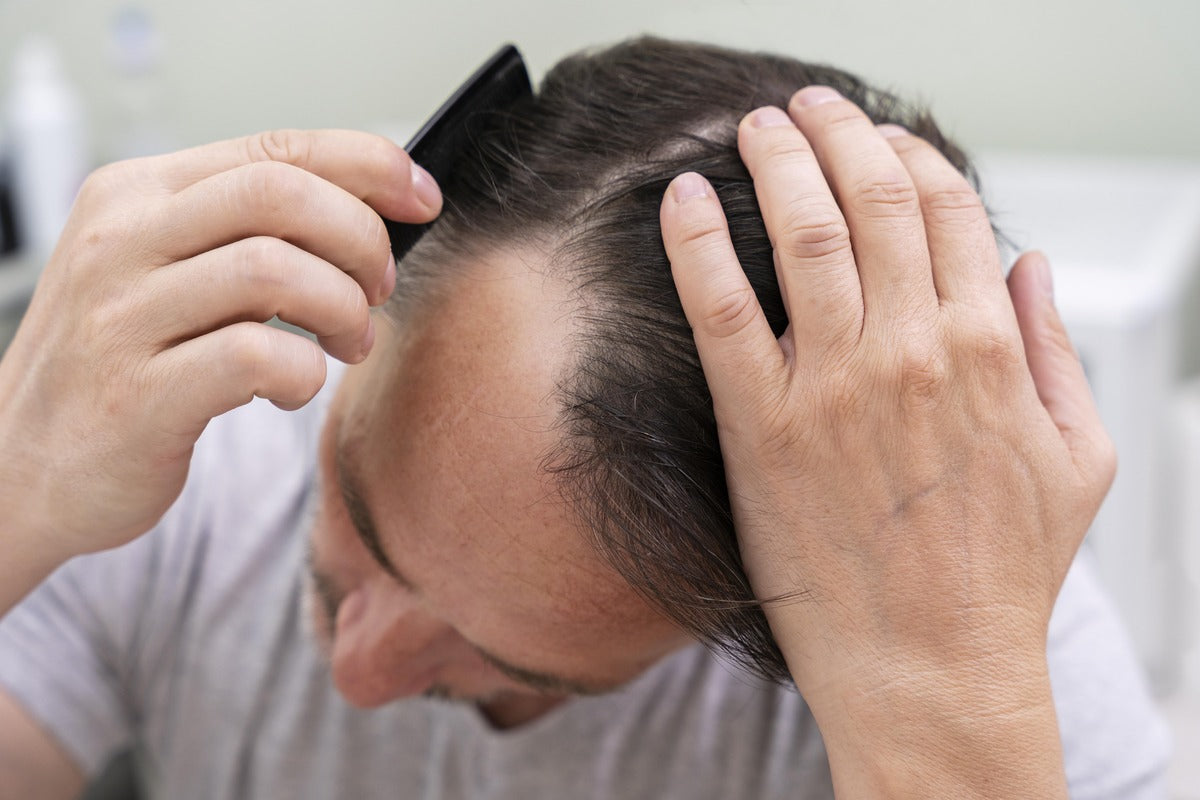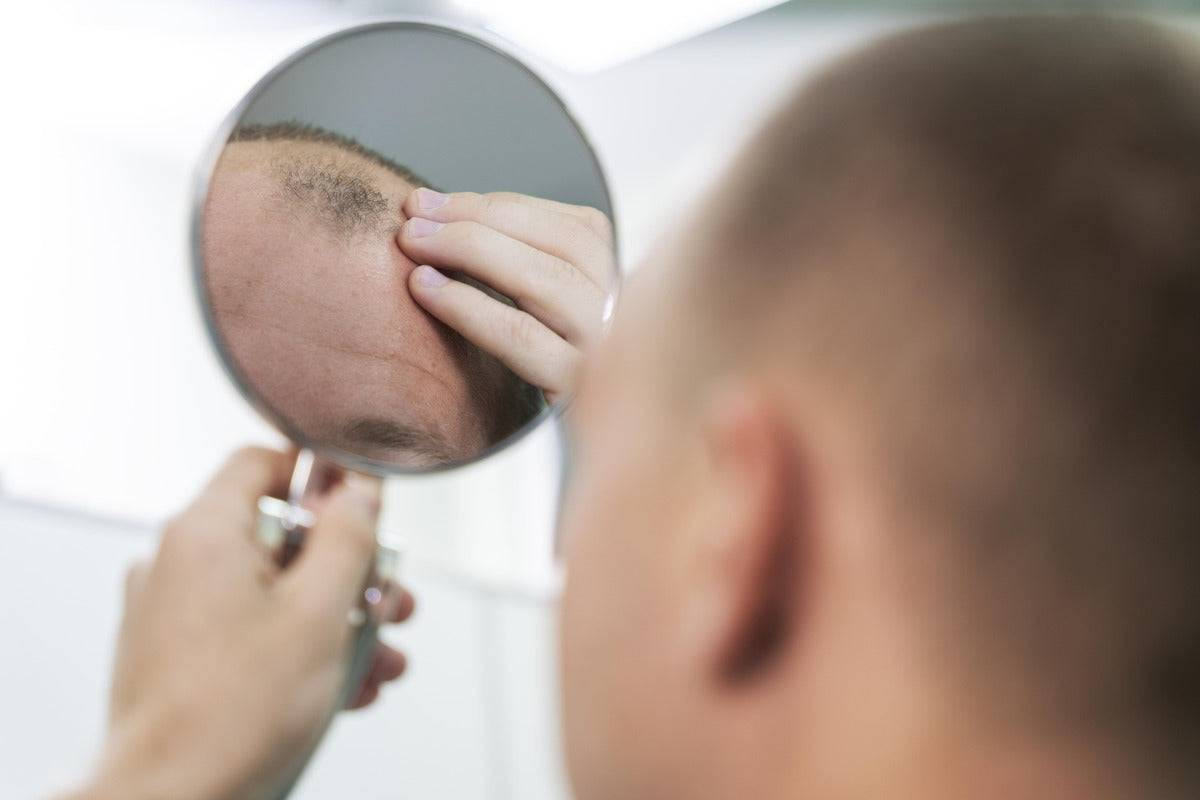

If you just started minoxidil and suddenly saw extra hair in the sink, you’re not imagining it. A lot of men get a short wave of shedding at the beginning. It feels unfair. You begin a treatment to save your hair, but you end up losing more.
So does minoxidil cause hair loss, or does it help? The shed is usually temporary. Most people see a temporary shed early on, then thicker coverage over time if they have androgenetic alopecia.
This guide explains why the “dread shed” happens, what the research says, what real users report, and how to set up a routine to get through the early chaos.
Why People Experience Shedding After Starting Minoxidil
Minoxidil is a topical vasodilator. It boosts blood flow where you apply it, which supports follicles. It also shifts follicles into the growth phase, called anagen, and can extend that phase. That push can shed weak, miniaturized hairs first, which looks like extra shedding. Many call this the “dread shed.” It is not a goal, just a byproduct of follicles syncing up to a healthier cycle.
Here is a quick view of how it works:
-
Follicles rotate through growth, transition, and rest. Miniaturized hairs from androgenetic alopecia sit in shorter growth phases and longer rest phases.
-
Minoxidil encourages more follicles to enter the growth mode at once. Old, wispy hairs detach, making room for thicker replacements.
-
That early turnover can look scary in the mirror, even though the end result often brings better density.
Minoxidil has FDA approval for androgenetic alopecia in men and women. Foam and solution come in strengths like 5% for men and 2% or 5% for women, depending on label guidance. Doctors sometimes use it off-label in other settings, but the strongest evidence is from AGA.
Early shed timing ranges from 2 to 8 weeks for many users. Some barely notice it. Others see more. It ties back to how many follicles shift into growth at once and how advanced the miniaturization is. Patience is tough during this stage, yet it is part of the expected pattern in many cases.
What Studies Say About Minoxidil and Hair Loss
Randomized trials and dermatology reviews have tested minoxidil for decades. Early shedding is mentioned in trials and clinical practice write-ups as a known phase that tends to settle as growth cycles normalize.
A few helpful sources to skim:
-
Men using 5% topical saw better hair counts and coverage than those using 2%, and both outperformed the placebo (E. Olsen et al., 2002).
-
Oral minoxidil was found to be an effective alternative hair loss treatment for patients who have difficulty with topical formulations (M. Randolph and A. Tosti, 2021).
-
The mechanism, dosing ranges, and known side effects of minoxidil, like local irritation and rare systemic effects (StatPearls).
Across studies, the pattern is consistent. Minoxidil helps many with AGA slow shedding long-term and improves coverage, especially around the crown. It does not fix every case. It will not revive dead follicles. It needs ongoing use to maintain gains.
That said, the evidence supports it as a solid base for genetic hair thinning. The early shed shows up in reports and usually fades as stronger hairs take over.
Real-World Experience From People Online
Spend ten minutes in hair forums or on Reddit, and you will see the same themes.
Timing varies. Some shed in month one, others closer to month two. A few do not notice any change. Some people also mention losing 95% of their hair after taking minoxidil.

Foam vs solution matters for comfort. People with sensitive skin often prefer foam since it is free of propylene glycol, a common irritant in many solutions.
Stopping too early is a common regret. Many posts describe stopping in month two during a heavy shed, then wishing they had kept going once they learned the shed phase is common.
Combinations are popular. Minoxidil and finasteride come up again and again, since finasteride reduces DHT that shrinks follicles. Some people also pair minoxidil with low-level light therapy or PRP.

People who stick with a routine week by week tend to report calmer minds once the shed slows and early growth shows up.

These stories do not replace medical advice, yet they offer a sense of what many live through. A clear plan, a steady timeline, and a scalp-friendly routine make the process easier.
How to Manage Minoxidil Shedding
If the early shed has you on edge, a few simple steps can steady the situation. Start with the basics, then fine-tune based on comfort and skin response.
-
Pick a form you can stick with. 5% foam is popular for its quick dry time and fewer reports of itch. Solution spreads well on longer hair but can cause irritation in some people.
-
Dose and schedule. Standard label dosing for men is 1 mL twice daily for solution or half a cap twice daily for foam. Many dermatologists are comfortable with once-daily 5% foam for men to improve adherence. Ask your doctor.
-
Apply to a dry scalp. Part the hair, press or spread into thinning zones, and wash hands after. Give it 2 to 4 hours before showering or shampooing.
-
Keep it steady. Consistency beats perfection. If you miss a dose, move on. Doubling up can irritate the scalp.
-
Ease irritation. Use a gentle shampoo. Use zinc pyrithione or ketoconazole once or twice a week if your doctor agrees. Foam can help if the solution stings. A light, non-comedogenic moisturizer can calm dry spots between doses.
-
Avoid quitting right at peak shed. Early loss often peaks in weeks 2 to 6, then tapers. Most users who reach months 4 to 6 feel better about density.
-
Support the scalp. Healthy skin provides a foundation for better coverage. Keep buildup low, avoid harsh styling, and watch for tight hats.
-
Stack it smartly. Minoxidil pairs well with a DHT blocker like finasteride, PRP sessions, or low-level light therapy. Additions should be reviewed by a dermatologist, especially if you have any medical conditions.
Common Combos and Alternatives
Many use a mix that addresses both sides of AGA: minoxidil + DHT for circulation and follicle cycling, and a 5α-reductase inhibitor for DHT control.
-
Finasteride + minoxidil. This duo has strong support for men with AGA. Minoxidil boosts growth signals. Finasteride lowers DHT, which helps keep follicles from shrinking further. Prescription needed.
-
Low-dose oral minoxidil. A doctor may recommend a tiny daily dose instead of topical for some patients. It needs blood pressure screening and follow-up, since oral versions can carry systemic side effects.
-
PRP. Platelet-rich plasma involves drawing blood, concentrating platelets, and injecting them into the scalp in a series. Studies show mixed yet promising results for AGA in some clinics.
-
Lower-irritant botanicals. Caffeine, rosemary, peppermint, licorice, and ginseng are often used to support scalp health and reduce breakage. The level of evidence is lighter than minoxidil or finasteride, yet many prefer a gentle base routine that includes them.
Spartan’s Root Activator line fits that last one. It focuses on scalp circulation, DHT exposure at the skin level, and calmer skin, using caffeine, ginseng, licorice root, peppermint oil, and rosemary oil. People often run a non-drug base like this and layer minoxidil.
Other Hair Loss and Shedding Reasons
If shedding feels off the charts, other triggers might be in play. AGA is common, though many factors can push hairs into rest all at once and cause hair loss.
-
Major stress, alcohol, illness, or smoking can spark telogen effluvium.
-
Thyroid swings, low iron or ferritin, and crash diets can thin hair.
-
New medications, including antidepressants, can cause hair loss.
-
Tight hairstyles, frequent bleaching, or hot tools can cause hair breakage.
-
Patchy bald spots point toward alopecia areata and call for a dermatologist visit.
A proper diagnosis helps you pick the right plan and timeline. Guesswork wastes time.
When Shedding is a Problem
Early shedding alone is not a reason to quit. But certain signs do need attention.
Stop and call a doctor urgently if you notice:
-
Facial swelling, hives, shortness of breath, or chest pain.
-
Fast heartbeat, dizziness, sudden weight gain, or swelling in hands and feet.
-
Severe scalp burning, blistering, or widespread rash.
Book a dermatology appointment if you see:
-
Patchy bald spots instead of diffuse thinning.
-
Heavy shedding that keeps going past month 3 or 4 with no slowing.
-
Thick scale, redness, or pus on the scalp.
-
New shedding after a recent illness, big stress event, or childbirth.
-
Eyebrow or eyelash thinning points to a different process.
These signs suggest an allergy, an unrelated shedding disorder, or a diagnosis other than AGA. A pro can sort it out and adjust your plan.
Summing Up and Next Steps
Minoxidil can cause short-term shedding at the start, as it induces follicles into a synchronized growth phase. For many with androgenetic alopecia, that phase settles, and long-term use helps keep more hair growing at once, especially at the crown and mid-scalp. Gains depend on steady use and realistic goals.
Next steps:
-
Get a clear diagnosis from a dermatologist so you know what you are treating.
-
Pick a form you can stick with and give it at least 4 to 6 months.
-
Consider adding a DHT blocker like finasteride if your doctor agrees.
Support your scalp health with non-drug products. Spartan’s Root Activator Shampoo, Root Activator Conditioner, and Root Activator Spray can be added to your minoxidil routine to improve scalp comfort and help hair feel fuller while you wait out the timeline. The Red-Light Therapy Cap suits users who want another tool in the mix that will boost hair growth.
FAQs
Can minoxidil cause shedding months after starting?
Yes. A second shed can happen around month three as more follicles sync up. It usually settles with steady use. If heavy shedding continues past month 4, see a dermatologist.
Can I use minoxidil on a receding hairline?
Yes, though the response is often stronger at the crown. Some see vellus hairs thicken along the hairline over time. Results vary with genetics and duration of thinning.
Do I need to use minoxidil forever?
Minoxidil supports active growth. Stop using it, and gains fade over several months since follicles return to their prior pattern. Many stay on it to maintain coverage.
Can I use minoxidil with derma rolling or microneedling?
Some clinics pair minoxidil with microneedling for AGA. Start low and slow under a dermatologist, since overdoing it can irritate skin and raise absorption risk.