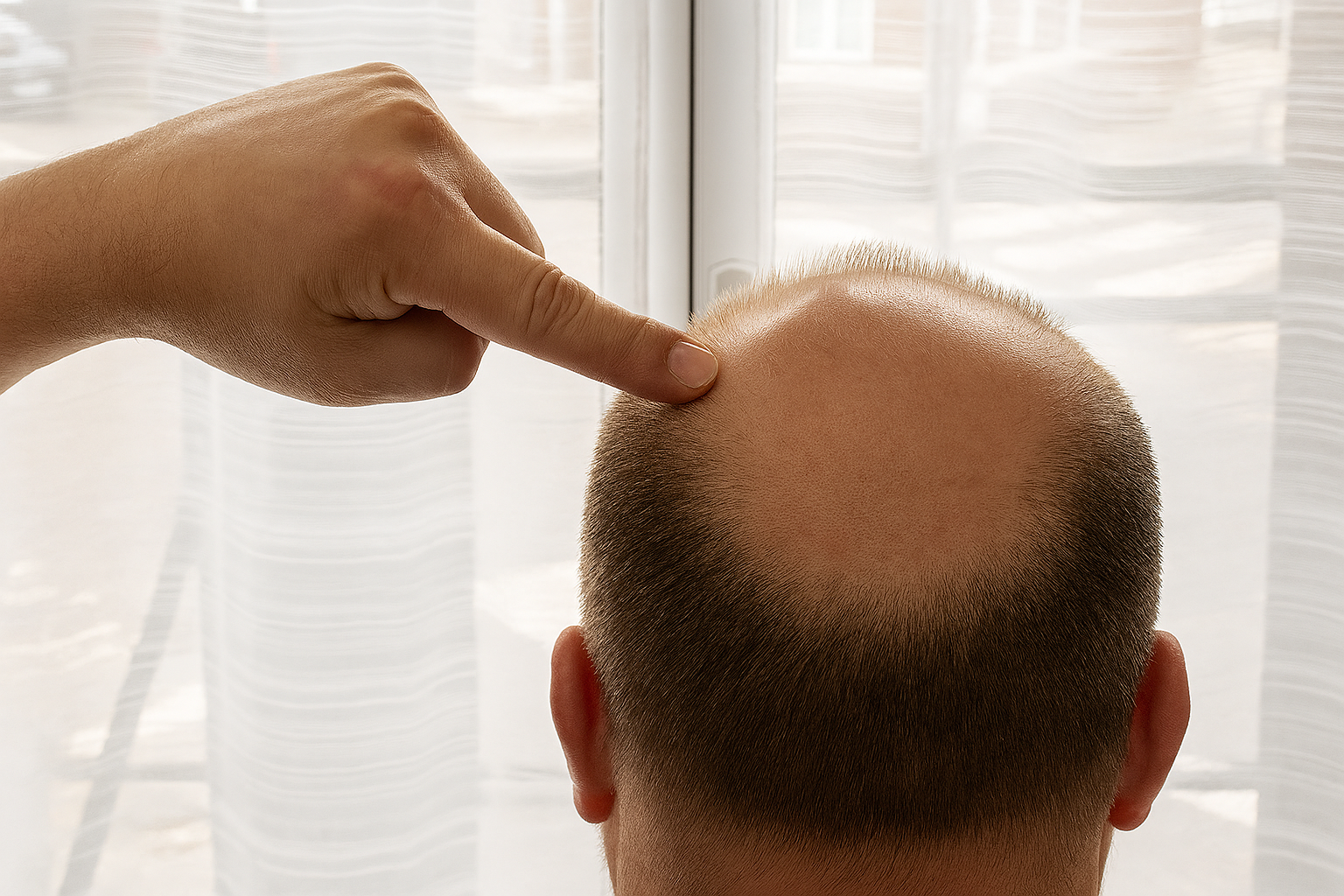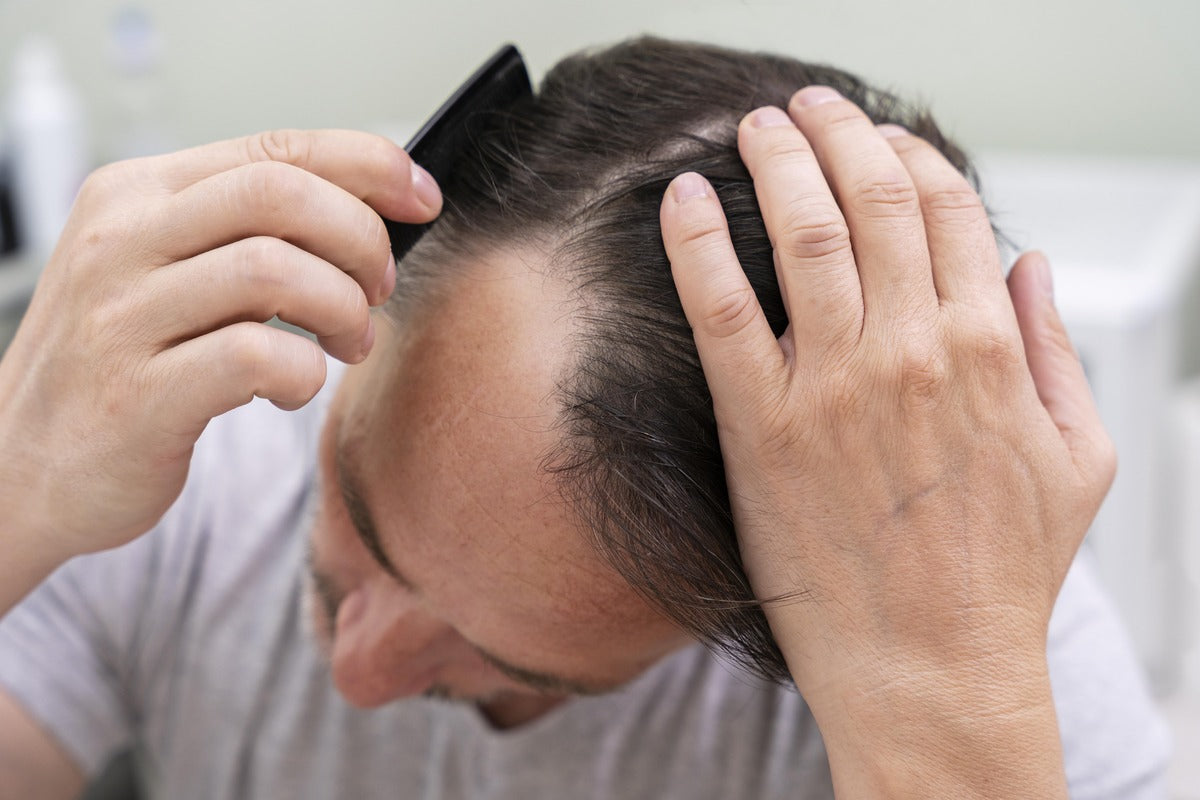

If you started Adderall and your hairline suddenly looks lighter, it’s hard not to panic. You might be wondering if the med is to blame or if something else is going on. Based on medical sites, hair loss after taking this med has been reported, but it appears uncommon, and there’s not much evidence.
Still, men talk about it a lot online, which means the concern is real. In this guide, we break down what’s known, what people say, and what you can do next.
How Adderall Could Trigger Shedding
There are a few plausible ways stimulant medicines could change hair growth cycles. None proves causation on its own. Together, they help explain why some people report shedding after starting or increasing the dose.
Telogen Effluvium
Hair grows in cycles. A trigger, like a new medication, illness, or major stress, can push more follicles into a resting phase called telogen. Two to three months later, more hairs shed at once. This is called telogen effluvium. It looks like diffuse thinning rather than patchy bald spots. Stimulants can be one of many triggers listed in dermatology references, which fit the timeline some users describe.

Appetite and Weight Loss
Adderall can curb appetite. Lower calorie intake and quick weight loss can bring on nutrient shortfalls. Hair is sensitive to low iron, ferritin, zinc, protein, and sometimes biotin. Even mild iron deficiency can increase shedding in men. If you lost weight quickly or started skipping meals, that alone can trigger telogen effluvium.

Stress and Cortisol
Some users feel more wired, anxious, or sleep deprived on stimulants. Higher stress and poor sleep can raise cortisol and disturb hair cycling. Stress is a classic trigger for telogen effluvium. For men who already have mild male pattern thinning, stress can make shedding more noticeable.
Blood Flow and Vasoconstriction
Stimulants can change peripheral blood flow and cause vasoconstriction in some people. This blood-flow hypothesis is often discussed by clinicians and users. Evidence is thin, yet it remains a reasonable theory for scalp changes in sensitive individuals.
What the Evidence Shows: Studies and Data Quality
Adderall manufacturer lists hair loss or alopecia as a possible adverse effect. It shows up in side effect lists that combine clinical trial data with postmarketing reports. That means people have reported it, yet there are no strong numbers on how often it happens.
Large trials on Adderall focus on core ADHD outcomes and common side effects like appetite loss, insomnia, and blood pressure changes. Hair loss is not a main endpoint, so the drug label and medical summaries rely on collected reports rather than prevalence rates.
So, it can happen, the label mentions it, but there is no clear rate or strong population data behind it. There are no large trials testing Adderall with hair loss as a primary outcome. Most of the published evidence sits in case reports, case series, and pharmacovigilance data.
Reports describe diffuse shedding or alopecia after starting or increasing amphetamine salts, methylphenidate, or related stimulants, with improvement after dose reduction or discontinuation in some cases. These reports help build a signal, yet do not prove causation for every user.
Many confounders remain, such as weight loss, stress, other medications, and underlying male pattern baldness. So the overall evidence grade is limited. The association is plausible, yet still not well quantified.
Common Patterns and Concerns from Men
Reddit is full of hair-loss stories linked to Adderall. These posts don’t prove anything, but they reveal patterns men keep reporting.

Shedding sometimes starts a few weeks or even a few days after starting the medication. Some men notice hair loss after dose increases.

Others say it lines up with an appetite drop or rapid weight loss.

A few say things improved after switching to another stimulant or lowering the dose.
Some point to stress from school or work as the real problem, not the med.
Since this is anecdotal chatter, treat it like talking to random guys at the gym. You can learn what others experienced, but you can’t treat it like research. Still, it does help men feel less alone when they notice the same issues.
Other Causes to Consider Before Blaming Adderall
Hair loss doesn’t always care what med you’re on. Men can lose hair for many reasons, and Adderall might get blamed even when something else is causing hair loss. Here are common causes and how to check them:
-
Male pattern baldness: Often comes with a receding hairline or thinning at the crown. A dermatologist or primary doctor can check patterns and family history.
-
Thyroid problems: Can cause diffuse shedding. A TSH test helps confirm.
-
Iron deficiency: More common than men expect. Low ferritin can weaken hair. Check ferritin and a full iron panel.
-
Low vitamin D or zinc: Both affect hair growth. Simple blood tests can pick this up.
-
Autoimmune issues like alopecia areata: Usually comes with round patches. A dermatologist can confirm.
-
Other medications: Some antidepressants, blood pressure meds, and acne treatments can affect hair.
Sorting this out helps you avoid stopping a medication that isn’t the real problem.
What to Do if You Notice Hair Loss After Starting Adderall
Hair shedding feels scary, but most cases men deal with are temporary. Start with a calm, stepwise plan. The aim is to track the pattern, rule out common causes, and adjust treatment safely with your clinician.
-
Map the Timeline
Write down when you started Adderall, the dose, any changes, and when shedding began. Note sleep, stress, illnesses, and weight changes.
-
Take Photos
Use the same lighting and angles weekly. Include hairline, crown, and part line. This helps your clinician see trends.
-
Check Nutrition
Log meals for a week. Aim for enough protein, iron-rich foods, and overall calories. If you dropped weight quickly, talk about a slower approach.
-
Ask for Basic Labs
This includes CBC, ferritin, iron panel, TSH, free T4, vitamin D, and zinc. Your clinician may add B12 or other tests based on your history.
-
Talk to Your Prescriber About Changing Meds
Do not stop Adderall on your own. Discuss a dose reduction, a drug holiday plan if appropriate, or a switch to methylphenidate or a nonstimulant such as atomoxetine or guanfacine. Many men do well after a small dose change.
-
Support Regrowth After a Diagnosis
Topical minoxidil can help many shedding types, including telogen effluvium and male pattern thinning. Ask your clinician if it fits your case and current meds. Good scalp care matters too. Some men like caffeine or botanical scalp formulas with ginseng, rosemary, licorice root, or peppermint. Spartan’s Root Activator line uses these actives and is made for quick daily use.
-
Watch for Rebound Shedding
Short-term shedding can occur when starting or changing hair treatments. This often settles. Keep your clinician in the loop.
Where This Leaves You
Hair loss with Adderall is reported yet appears uncommon, and the evidence base is thin. If your hair changed after starting Adderall, you’re not alone, and there are smart ways to figure out what’s going on. Track your timeline, get basic labs, and talk with your prescriber. Address nutrition and sleep. If you need a hair plan, ask about options like minoxidil and supportive scalp care.
If you want a nonprescription routine that fits into two minutes, explore Spartan’s Root Activator line and speak with your clinician about how it can fit your plan.
At Spartan, we’ve helped thousands of men restore their confidence. No matter what causes your hair loss, our solutions are designed to support healthy regrowth from the inside out.
-
Root Activator Shampoo for Men: This anti-DHT shampoo gently cleanses while helping block DHT, a hormone linked to hair thinning. It boosts circulation at the scalp to support fuller, stronger hair.
-
Root Activator Spray for Hair Loss: A fast-absorbing spray that stimulates dormant follicles and supports regrowth, especially effective for recent or stress-related shedding.
Our hair product line is packed with vitamins, including biotin, zinc, iron, and B-complex. They help nourish your scalp from within. Ideal if appetite loss from Adderall has led to deficiencies.
FAQs
Is hair loss from Adderall permanent?
Usually no. Telogen effluvium tends to reverse once the trigger is managed. Male pattern thinning is ongoing without treatment.
Will switching to another stimulant help?
Some men improve after switching to methylphenidate or adjusting the dose. Work with your prescriber.
Could Adderall make male pattern baldness worse?
It may unmask thinning you already had. A dermatologist can tell you if MPB is present.
Can stopping Adderall suddenly make hair loss worse?
Stopping suddenly is not advised. Sudden changes can add stress. Speak with your prescriber about a plan.
Can Adderall cause scalp dryness or dandruff that looks like thinning?
Some users report dryness or flaking. That can make hair look thinner. Treat scalp health and review products.
Does combining Adderall with caffeine increase shedding?
Extra stimulants can raise stress and sleep loss for some people. That may amplify shedding triggers.
Can Adderall interact with other medications to cause hair loss?
Certain meds have hair loss risk on their own. Review all prescriptions and supplements with your clinician.