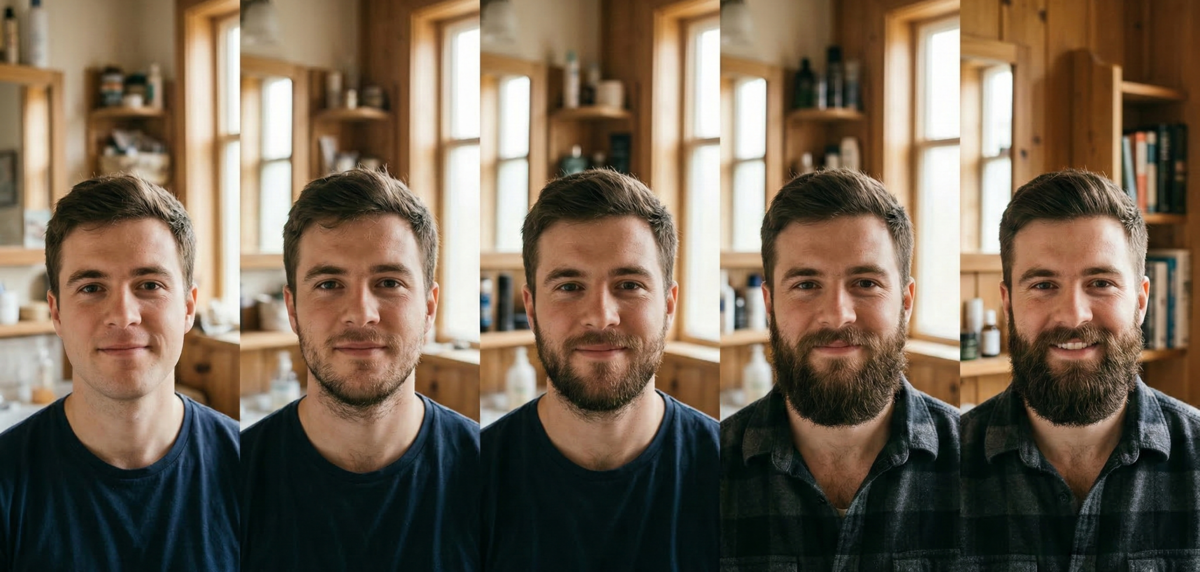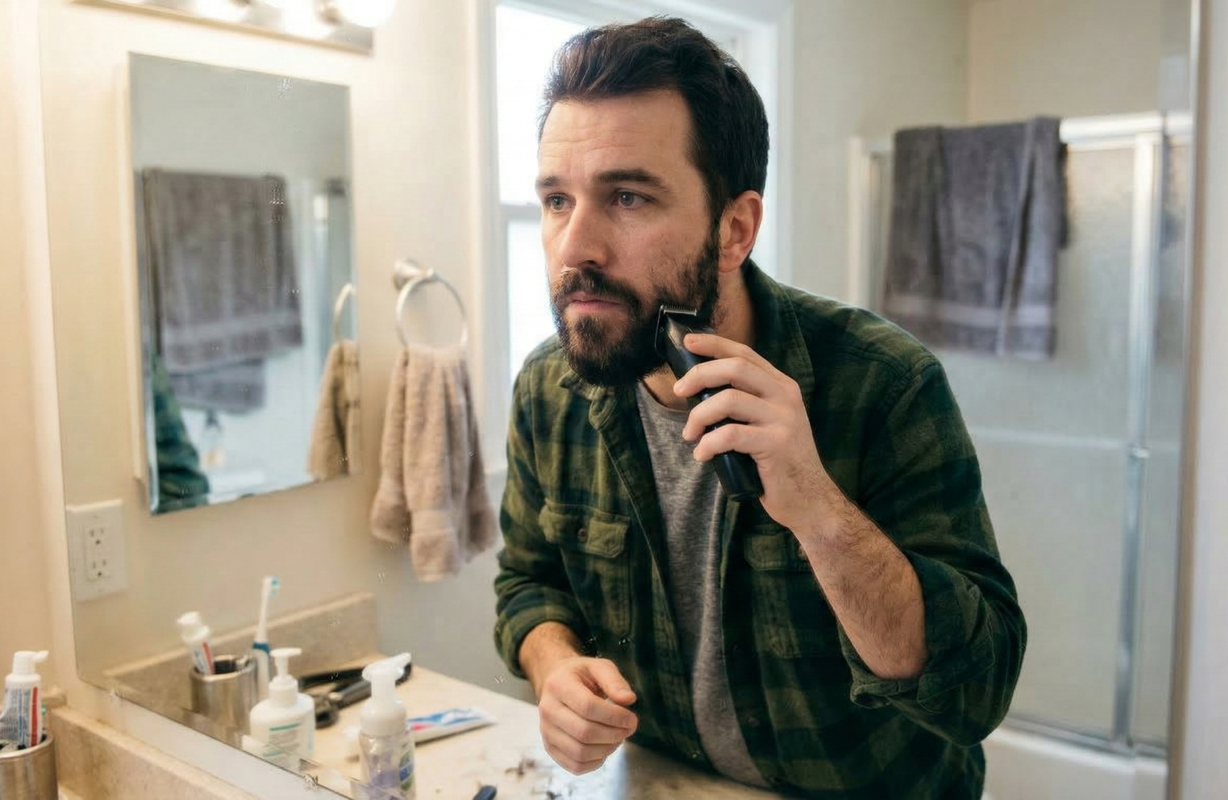
You trimmed your beard and waited for results. You hoped to grow a full beard like others do. But if your face still looks the same each time you try to grow a beard, there might be some issues.
Beard growth is mostly genetic. Hormones play a role too, but your follicles decide where and how thick hair grows.
This guide will help you figure out whether you’re just in late-bloomer territory or if your face is likely set to grow a lighter beard in the long term. Here are the 7 signs.
1. Your Beard is Extremely Patchy (And Never Fills In)
Hair on the cheeks usually grows more slowly than on the mustache and chin. So a bit of patchiness in the beard early on is common. Small gaps can close as hairs get longer and neighboring areas catch up. That’s the early stage that most teens and early twenty-somethings see.
Permanent patchiness feels different. You’ll notice random bald spots in the beard that never pick up new growth, especially on the cheeks or high on the sides.

You let it grow for months, and those spots stay the same size and shape. The rest of your beard may grow longer, yet the empty areas remain bare with smooth skin or faint fuzz that never thickens.
A few thin patches don’t mean much. The red flag is large areas that refuse to fill after a few growth cycles. If you’ve given it time and the same bald zones persist, genetics is likely calling the shots.
Can patchy beards improve? Sometimes, in the early 20s. Follicles can still mature and turn vellus hairs into thicker strands. Once you reach the late 20s, big changes in empty zones are uncommon. Small gains can still happen, but full coverage in those bare spots is rare.
2. It’s Been Years, and Nothing Has Changed
Plenty of guys ask why they can’t grow a beard in their 20s. The timing varies. Many see major gains between ages 18 and 25, and some continue to mature into the mid-20s.

Growth rate and density are different, though. Hair can grow fast and still look thin, and vice versa.
If you’re in your late 20s or 30s and your beard looks the same year after year, there’s likely a stable pattern. A new patch won’t usually appear out of nowhere at that point. You might notice more fullness under the jaw or along the chin line as the years pass, yet large cheek gaps that never changed by 28 or 30 usually stay the same.
No need to read this as bad news. It’s not a verdict. Knowing your baseline helps you pick styles that look sharp and avoid frustrating grow-outs.
3. Only Your Neck Grows Hair
Neck hair growth without cheek coverage is a classic pattern. The throat area and under the jawline fill in, but the cheeks stay thin. Growth patterns are mapped by your follicles. Shaving doesn’t change where follicles appear or how many you have. It doesn’t make hair thicker or darker. That’s a very common myth.
If your neckline grows fast while your cheeks don’t, you should find the right shape that looks good. You can:
-
Clean up the throat to a natural curve about a finger or two above the Adam’s apple.
-
Fade the line under the jaw so the edge looks intentional.
-
Keep cheek lines neat and let the goatee zone carry the look.
A tight stubble or short goatee can frame the face better than weeks of untrimmed neck hair.
4. Your Beard is Very Thin and Wispy
Beards often grow long but very thin and see-through. Density and strand thickness matter more for that full look.
Each follicle produces a hair with a set diameter. Androgen sensitivity helps decide whether a follicle will make a coarse terminal hair or stay in vellus mode. If your follicles are set to produce finer strands, you can grow them out, but the result may still look light on the cheeks or jaw.
You can use different beard care products to style your beard. A nourishing beard oil can weigh wispy ends a bit. A matte styling balm can make it look a little fuller. These products don’t change how many follicles you have or how thick each hair grows. They just help you make it look better.
5. The Men in Your Family Can’t Grow Beards Either
Hair genetics run strong. Look at your father, brothers, and maternal uncles. If most of them have patchy cheeks or very light coverage, there’s a good chance you’ll grow it the same way. If they carry full beards easily, you might just need time to reach that stage.

One point many people miss is that it isn’t just testosterone levels. It’s how your follicles respond to androgens like DHT. Two men can have similar hormone levels yet grow very different beards based on follicle sensitivity and receptor activity. Light beard growth in an otherwise healthy guy is common and usually not a medical issue.
So if your family tree shows sparse growth across generations, set your expectations accordingly and choose styles that fit that pattern. You can still look polished with stubble, a goatee, or a mustache that suits your face shape.
6. You’ve Tried Growing It for 3+ Months With No Real Coverage
People ask how long they should grow a beard before judging it. A solid rule is 8 to 12 weeks. That window lets slower follicles cycle in and gives the faster ones time to add length. You’ll see your true coverage by then.
After three months, if your beard still looks scattered with wide gaps, that’s probably your maximum density for the cheeks. Trimming too early can hide potential, since fresh stubble looks denser even when the overall coverage isn’t changing. Letting it grow for a full quarter gives you the clearest picture.
Once you’ve tested that window twice and the outcome is the same, it’s smart to adjust your growth plan.
7. You’re Over 30, and Growth is Still Minimal
By 30, most beard patterns are set. Big shifts usually happen before that. You might see a bit of thickening around the chin or under the jaw in your 30s, sometimes into the early 40s, but dramatic cheek coverage that never showed by 30 is rare.

If you’ve crossed that age and don’t have a beard, or your beard remains minimal, consider it your baseline. That frame can look clean and intentional with the right style. Keep the neckline crisp, keep cheek lines tidy, and focus on the mustache or goatee area if those zones grow well.
Can You Fix It?
If you have any of the above-mentioned signs, you might wonder if there’s a way to fix it. Lifestyle helps your follicles do their best work, but it won’t rewrite genetics.
-
Sleep supports hormone balance.
-
Protein, iron, zinc, and B vitamins help hair grow to its potential.
-
Lifting weights or working out helps reduce long-term stress.
-
Keeping your skin clear supports a healthy growth setting.
These steps raise the ceiling for the follicles you have. They don’t add new follicles where there aren’t any.
Minoxidil for beard growth is a common topic. Many use the foam or liquid on the face, even though it’s sold for the scalp. Some report thicker coverage over months of steady use. Others see little change.
The skin on the face can be sensitive, and you might have some side effects, like dryness or irritation. Speak with a doctor if you’re unsure whether it’s a fit for you. Read the label before trying anything new. Results vary, and stopping use often means new gains fade.
Microneedling devices, like a short-needle dermal roller, are sometimes used a couple of times a week tostimulate circulation. The idea is to wake up sluggish follicles. If you try it, keep the skin clean and don’t press it hard on your skin.
Claims about vitamins that add new follicles should be viewed with caution. A basic multivitamin can cover gaps in your diet, and a biotin boost can help brittle hair break less. That said, supplements don’t create new coverage in empty zones. They support the hair you already have.
Grooming can do more than you think. A short boxed beard can look better than a longer, see-through beard, since length can make thin areas stand out. Think of style as a tool to steer eyes toward your strong zones.
If you want medical solutions, you can consider a transplant. This procedure moves follicles from the scalp to the face. It can be costly, with recovery time and scarring risks. Results can look very natural in the right hands. This is a decision to make with a qualified surgeon after a proper consultation.
Not Growing a Beard Isn’t a Flaw
Plenty of men look sharp with clean-shaven cheeks or light stubble. A short goatee can bring the chin forward. A fuller mustache can balance strong cheekbones. Confidence shows more than beard density ever will.
Before you try any new product, set a clear baseline. Grow for 8 to 12 weeks, take a photo in good light, then shape a style that matches your pattern. If you’re in your early 20s, give it another season and reassess. If you’re past 30 and growth has stayed the same for years, shift from chasing coverage to refining a look you like.
Everyone grows a beard differently, and that’s fine. And if you want a routine that keeps the skin under your beard calm and the hair you do grow in at their best, Spartan is here to help with beard care that fits into a two-minute routine.
Make your beard look stronger and healthier with Spartan’s Beard Growth Kit, which includes a derma roller and growth activator. It focuses on the roots with caffeine, ginseng, licorice root, peppermint oil, and rosemary oil, the same science-driven approach we use for scalp care.
The routine is quick and easy to stick with, and it’s made to support circulation at the skin level. That won’t change your genetics, yet it can help your beard area look fuller, neater, and better groomed.