You shave, take a look, and already start picturing the beard you want. A few days later, the picture changes. Some areas get patchy, some areas fill in, and for a while, it looks worse before it looks right.
That is normal. Beards grow in phases, and most guys hit that awkward stretch where it’s patchy, itchy, and easy to second-guess. Trim it? Start over? Tough it out?
Knowing the stages of beard growth helps. You stop overreacting to the rough phase and give your beard enough time to finally start looking good.
In this article, we will talk about the beard growth stages and grooming tips for each.

Stage 1: Clean Shave (Day 0) and Your Beard Growth Starting Point
A clean shave is the true start. Your face feels smooth, your skin looks fresh, and everything seems neat for about a day. Then the reset begins.
Even at the first stage of beard growth, the follicles under your skin are already active. The hair is not visible yet. But growth has started below the surface. That matters, since a beard does not begin the moment you see stubble. It begins before that.
Most people judge beard progress from memory, and memory is unreliable. A photo shows where your beard was dense, where it was thin, and how much change happened after a few weeks. This is a good time to take a before photo.
Look closely at your natural pattern. Maybe your chin and mustache grow fast. Maybe your cheeks take longer. That early check gives you a realistic beard growth starting point and saves you from comparing your week-two beard to someone else’s month-three beard.
Stage 2: Stubble (Days 1 to 7) and the Beard Itch Phase
This is the part most people know well. The hair starts pushing through, and your face stops feeling smooth. The texture turns rough. Your neck can feel prickly. If you have ever quit in beard growth week 1, you probably quit here.
The beard stubble stage feels annoying. Freshly shaved hair has a blunt edge. That cut tip feels sharper against the skin than a longer hair with a natural taper. So the itch is not a sign that your beard is growing wrong. It is just the short-hair phase doing what short hair does.
The neck is usually the worst area. The skin there is often more reactive, and shirt collars can rub against those tiny hairs all day. Add dry skin into the mix, and the itchy phase can feel endless. It is not endless. For most men, it settles down once the hair gets a bit longer.
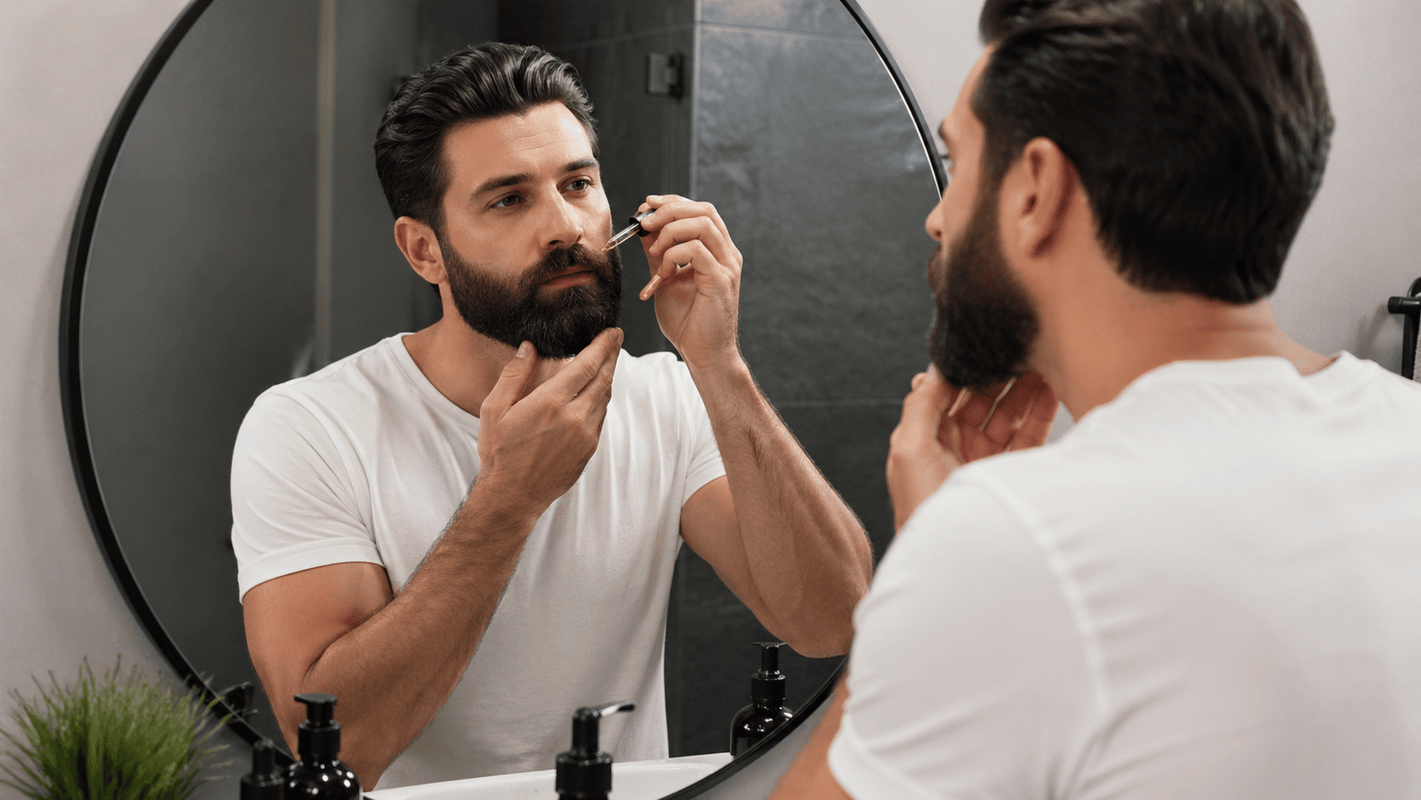
A light beard oil or face moisturizer helps here. You do not need anything fancy. The goal is simple: soften your beard and keep the skin from drying out. If you are using a beard care routine, week one is when it starts to matter.
The bigger issue in this stage is impatience. Stubble can make you feel stuck between clean-shaven and bearded. If your face feels itchy in the first week, that is normal. Give it time, keep the skin hydrated, and get past the stubble.
Stage 3: Patchy Growth (Weeks 2 to 4) and the Awkward First Month
Weeks two through four are often the hardest stretch in the beard growth timeline. You have enough hair to see your pattern, but not enough length to hide the weak spots. One cheek may look thin. The mustache and chin may come in fast. The sideburns may look strong on one side and weaker on the other.
That patchy beard stage is common. Facial hair follicles are not spread evenly across the face, and they do not all grow at the same time. Some hairs are active sooner. Some take longer. That is why beard growth in month 1 can look uneven.
You may feel tempted to clean it up and “fix” the patchy spots. Here is why that usually backfires: trimming the sparse areas does not make them grow faster. It just cuts back the faster-growing sections.
What looks like a gap at two weeks can look much smaller at six weeks once nearby hairs have grown long enough to cover it. Density matters, but length helps more than you think it does.
The awkward stage feels long when you are in it, but it passes. The best move here is to let your beard grow following its pattern.
Stage 4: Early Beard (1 to 2 Months) When Things Start to Come Together
Around the one-month mark, the beard starts to look like a real beard instead of overgrown stubble. This is the early beard stage, and it is a turning point. Coverage looks better, thin spots start blending in, and the texture feels softer than it did in the first week.
At this point, the beard looks very different from week 1. The harsh, scratchy feel starts easing off. Hairs that once stood straight out begin to settle. If you are around 6 weeks into beard growth, you will likely notice that the beard looks fuller, even if every gap has not filled in.
The new challenge is the direction in which it grows. Some hair grows down, others curl off to the side. That is normal too. A beard comb or brush helps shape the beard. A minute or two each morning is enough for brushing.
This is still early for a full shape-up. A heavy trim at this stage can set you back. A light neckline cleanup is fine if you want a cleaner look. Give it some time to grow out before you start carving lines into it.
The beard starts looking more settled at one to two months. Keep the major length, clean up the neckline if needed, and start brushing daily.
Stage 5: Full Beard (2 to 3 Months) and the Start of Proper Grooming
This is the full beard growth stage that many men picture when they first decide to grow one. By months two to three, the beard usually has enough length and density. The shape is clearer. You can style it instead of just waiting on it.
This beard growth stage often brings a big shift. The cheeks look fuller, the chin has real presence, and the mustache starts affecting the overall style of the beard. You are no longer asking whether you can grow a beard. You are deciding what kind of beard you want.
That is where shaping comes in. A good trimmer helps. Beard scissors help too, mainly for the mustache and stray hairs above the main shape.
Routine matters more at this stage. Wash the beard on a regular schedule with a cleanser made for facial hair or gentle skin care. Use conditioner or beard oil if the beard feels dry. Comb it daily to keep a consistent shape. If you skip care now, your beard can start to feel coarse even if it looks full.
At two to three months, your beard has shape and presence. There is enough growth to work with, and enough length to see what changes improve the look.
Stage 6: Long Beard (3 to 6+ Months) and Its Maintenance
By the time you hit month three and move toward to month 6, your beard has more weight. Thickness and even color shifts become easier to see. And it shows more texture.
A lot of men feel like growth slows down here. In most cases, it only seems that way. Early gains are easy to notice on a clean face. Later gains blend into a beard that already has length, so the change feels smaller from week to week.
Asymmetry is still normal here. One side may stay thicker. One corner of the mustache may grow faster. Good grooming makes them less obvious.
Long beard maintenance gets more serious at this point. The skin under the beard can dry out if you ignore it. The outer hairs can turn brittle if you wash them too often and never add moisture back in. A steady routine of cleansing, conditioning, brushing, and oiling keeps the beard softer and easier to shape.
What Affects How Fast Your Beard Grows?
Genetics decides a lot. It has the biggest effect on beard density, growth speed, and the places where hair grows well or grows lightly. Some men can grow heavy cheek coverage in a month. Others build a strong chin beard but never get full cheeks. Both patterns are normal.
Age, hormones, food, sleep, stress, and grooming habits shape the rest.
Testosterone and DHT influence facial hair growth, which is one reason beard growth often gets stronger from the late teens into the late 20s and 30s. Age changes the picture. A beard that looked patchy at 20 can look much better at 28.
Hair is made mostly of protein, so diet plays a role in hair quality. Sleep matters too. High stress and poor sleep can throw off the body’s normal growth rhythm, and hair often shows that strain.
Skin care and grooming matter in a different way. They do not rewrite your genetics, but they help your beard look better through every stage. Clean skin, less irritation, and steady brushing make it easier to stick with the process.
Make It Through Every Stage With the Right Routine
A beard does not appear all at once. It builds through six stages, each with its own mix of progress and frustration. The men who end up with solid beards are not always the fastest growers. They are often the ones who stay patient, keep a steady routine, and stop reacting to every awkward week.
Knowing what to expect is half the battle. The other half is taking care of your skin and beard through each phase, from the itch of week one to the shaping work that comes later.
Understanding the stages of beard growth changes how you approach the process. You stop guessing, give your beard time, and treat each phase for what it is.
If you are serious about making it through every stage, Spartan’s Beard Growth Kit puts the daily care pieces in one place. The kit comes with beard oil and a derma roller, which are especially good for the early stages of beard growth.