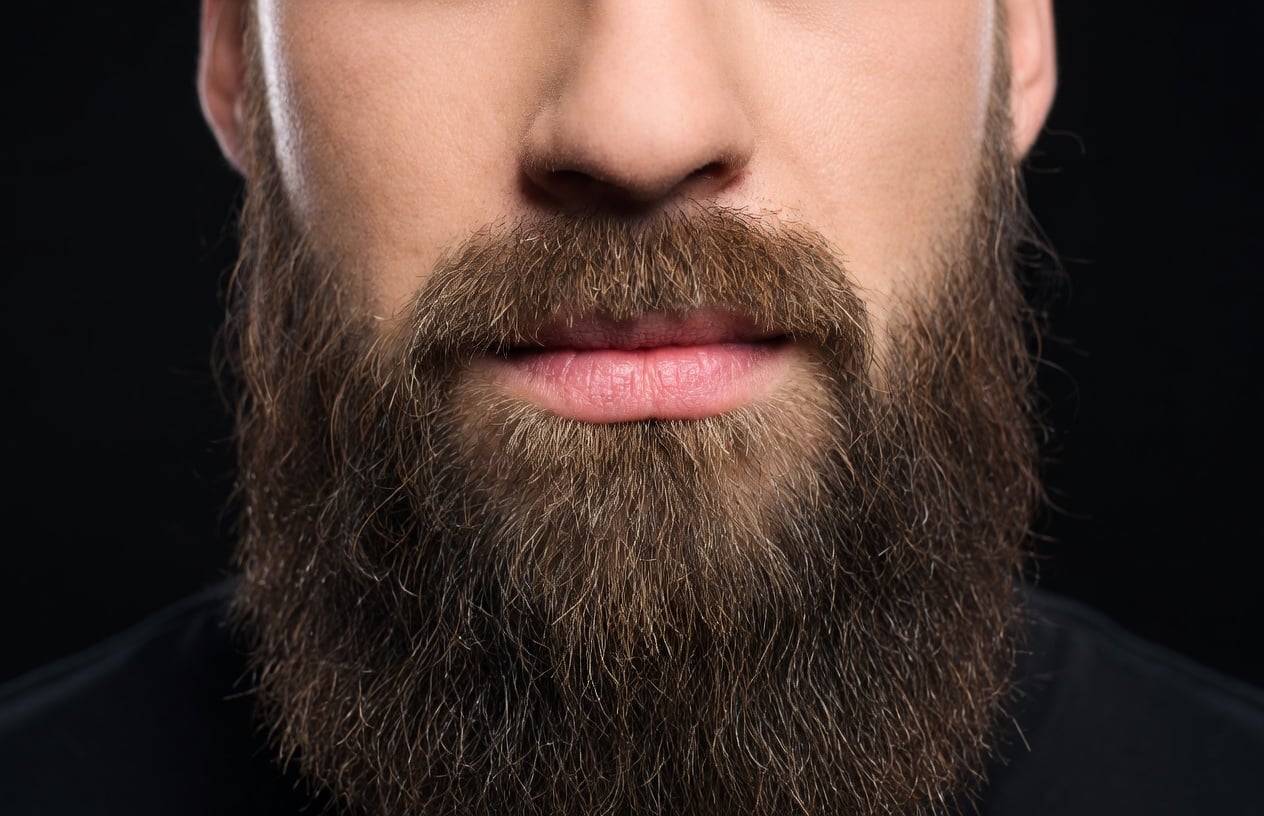
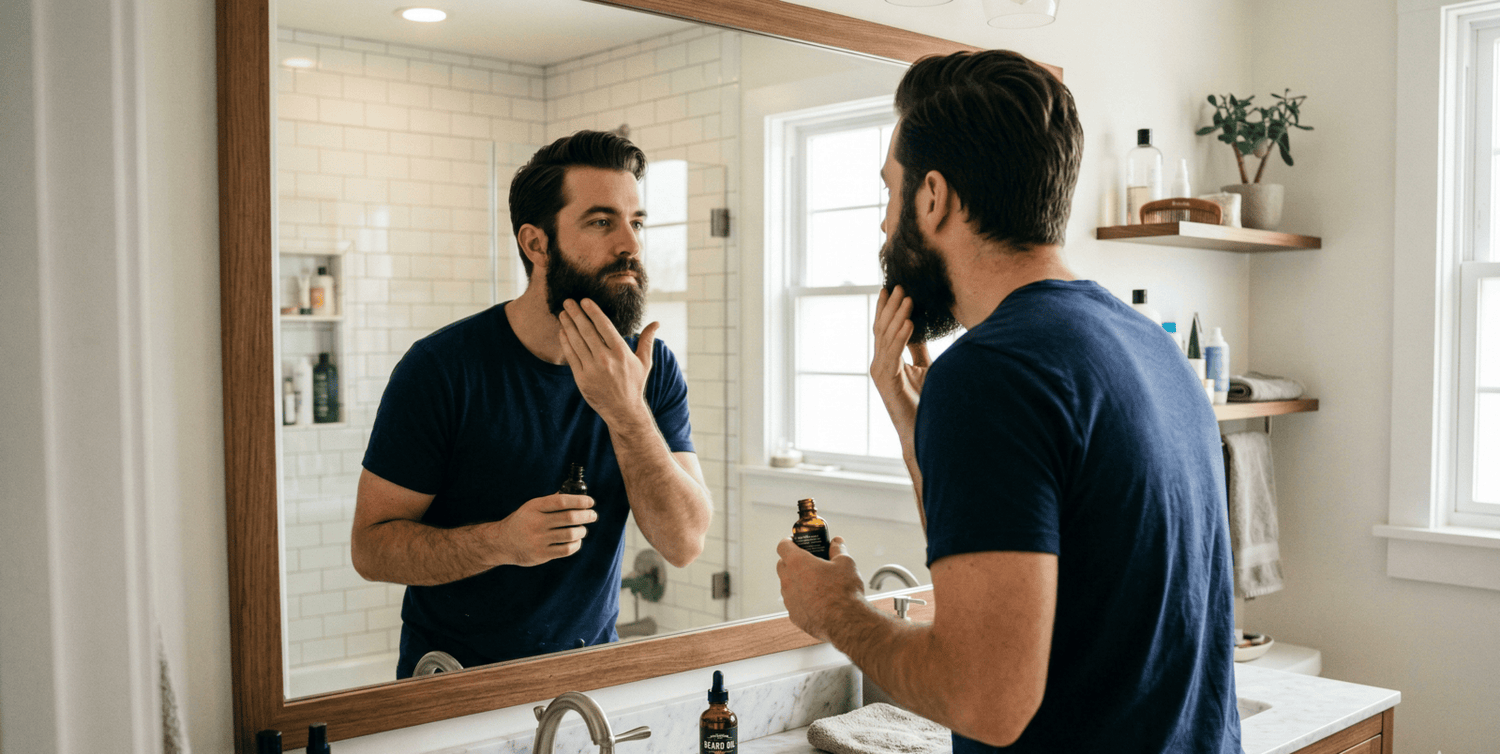
Rough beards are pretty common. A lot of guys have coarse beards, especially in the first few months after they start growing them. To make your beard soft to the touch, you can follow a simple routine.
This guide walks you through steps to reduce roughness and make your beard easier to manage. You’ll learn why beard hair feels coarse, then get a simple daily routine you can follow.
Why Your Beard Feels Coarse
Facial hair has a different structure from scalp hair. Strands grow thicker, with a curlier shape and a tougher outer layer called the cuticle. That extra texture creates more friction.
Sebum, your skin’s natural oil, helps keep the hair soft. Short stubble gets plenty of it. As your beard gets longer, that oil struggles to cover the full length. The result is dry ends and split tips, so your beard feels coarse.
Water quality matters too. Hard water leaves mineral deposits on hair, which can make strands feel stiff. And when you use harsh soaps, they strip moisture from both hair and skin.
Some beards grow thicker and wirier, while others don’t. Your genetics set the baseline, but you can still make progress. You’ll just need more hydration and steady care to grow a soft beard over time.
Best Products for a Softer Beard
No need to turn your sink into a mini store. A few well-picked products beat a dozen random ones. Look for simple formulas that get the job done.
Best for Short Beards
A light beard oil with a carrier oil base like jojoba, argan, or grapeseed. Like your skin’s natural oils, they absorb quickly. Pick fragrance-free oils if your skin gets irritated easily. Skip heavy nut butters at this length since they can feel greasy.
Best for Long Beards
Beard balm or beard butter. Balm uses oils with beeswax or plant wax for light control and moisture lock. Butter uses oils with soft butters like shea or mango for deeper conditioning and a softer finish, with little to no hold. Choose balm if you want shape, choose butter if you want plush softness.
Best for Coarse or Curly Beards
A leave-in conditioner spray. Look for aloe vera, panthenol, glycerin, and light oils. A midday mist smooths frizz, adds slip, and refreshes curl pattern without a full wash. Keep one at your desk or in your gym bag.
Good for Sensitive Skin
Alcohol-free formulas and simple scents or essential oil-free options. If you like a fresh feel, peppermint or rosemary at low levels can give a clean, cool finish, though keep an eye on your skin response.
Wash Options
A liquid beard wash is gentle and easy to spread through dense beards. A shampoo bar lasts a long time. Check that either option lists gentle surfactants and skin-friendly hydrators. Strong products can make your beard feel stiff within a few days.
Ingredients to Skip
Sulfates, parabens, and high alcohol content. These dry out the skin and rough up the cuticle, bringing the “pinecone” texture right back.
Step-by-Step Beard-Softening Routine
Here’s a simple beard care routine you can start today. Keep it consistent for the next few weeks, and your beard should feel noticeably softer.
Step 1: Wash With a Beard Shampoo
Regular hair shampoo strips the natural oils that your facial hair needs. A beard wash keeps the skin clean without leaving your beard squeaky and dry. Use lukewarm water. Hot water dries the cuticle and the skin under your beard. Massage the cleanser into the skin for 30–60 seconds to loosen dead skin and clear buildup at the roots.
Step 2: Apply Beard Conditioner
Follow your wash with a beard conditioner or use a co-wash on non-shampoo days. Work it through from skin to ends and let it sit for 2-3 minutes before rinsing. Look for shea butter, argan oil, and aloe vera for softness and slip. This step helps the “pinecone” scales lie flat so the beard feels smooth.
Step 3: Pat it Dry
Rubbing your beard with a towel can lift the cuticle and cause frizz. Gently pat it with a soft towel to remove extra water. A microfiber towel works best. It reduces friction and helps prevent split ends.
Step 4: Apply Beard Oil
Use 2 to 4 drops of beard oil for a short beard and 4 to 6 for a longer one. Start at the skin and work outward so that both the roots and ends get coverage. Jojoba, argan, and sweet almond oils are solid picks because they sink in fast and soften well. Hydrated skin also cuts beard itch, which makes staying the course easier.
Step 5: Finish with Beard Balm
Warm a small amount of balm in your hands, then apply it from your cheeks to your chin. It locks in moisture, adds light hold, and helps longer beards stay neat. It also protects the ends throughout the day. If your beard is around 2 inches or more, balm often gives you what oil alone can’t.
Step 6: Brush Your Beard
Brushing brings a softer feel and a tidier shape. A boar bristle brush spreads natural oils from root to tip and trains hairs to lie in one direction. It lifts loose flakes from the skin too. Brush every day, even if you skip washing your beard.
Common Mistakes That Make Your Beard Rough
Some small habits can sabotage softness. If your beard feels like it’s stuck in prickly mode, one of these could be the reason.
Washing too often with shampoo: Shampooing every day strips sebum and leaves hair exposed. Switch to 2-3 wash days per week and use water rinses or a light co-wash in between.
Using hot water: Hot showers feel nice, but they dry out your skin and lift the hair cuticle. Use lukewarm water instead.
Skipping conditioner or beard oil: Hydration keeps each strand soft. Without conditioner in the shower and oil afterward, your beard will dry out by midday.
Using a plastic comb: Cheap plastic combs often have seams that snag and tear hair. A boar bristle brush or a good wood or horn comb glides through without scratching.
Trimming too often during early growth: Over-trimming keeps ends blunt and prickly. Let it grow for a few weeks, then shape lightly. Softness improves once tapered ends replace sharp stubble tips.
How Long Does It Take to Soften a Beard?
Here’s a simple timeline you can take into account:
Week 1: Itch starts to fade, and the rough feel eases a bit. Ends feel less sharp, and brushing in the morning gets a little smoother.
Weeks 2-3: The beard feels clearly softer. A brush or comb glides through with fewer snags, and shaping takes less time. Balm or butter gives a clean finish without much effort.
Weeks 4-6: Softness holds through the day. Frizz drops, the beard looks neater, and hair lies in the same direction.
Track quick notes each week so you can see progress and adjust wash days or oil drops as needed.
Beard Itch Relief Tips
Dry or clogged skin under your beard often causes itchiness. To ease it, focus on the skin under your beard. Gently cleanse to remove sweat and buildup, then rub a few drops of beard oil between your palms and press it down to the roots. This keeps the skin moisturized and comfortable.
If you’ve just started growing your beard out, give your skin a couple of weeks to adjust. As the hair softens and stops poking at your skin, the itch usually fades, and the beard area feels calm.
Summing Up
Making a coarse beard softer comes down to consistent care. Wash on set days, hydrate in the shower, seal with oil and balm, then brush every day. Most beards feel smoother and less itchy after a few weeks of consistent care. Even thick and wiry hair can turn around.
If you want an easy starting point, try Spartan’s Beard Growth Kit. It pairs a nourishing beard oil with a dermaroller for anyone aiming for a fuller beard. Follow the simple routine, note changes for 8 to 10 weeks, and keep what works. A softer feel and a neater look come from the small steps you repeat each day.